For most of the last century, adulthood followed a predictable arc. Education prepared people for work. Careers rewarded expertise, loyalty, and the steady accumulation of experience. Retirement marked the beginning of life’s final chapter. Success had a clear direction: forward and upward.
That model no longer reflects reality.
Adults turning 50 today can reasonably expect another three decades—or more—of active life. Many will launch businesses, change careers, care for aging parents while supporting adult children, return to school, or continue working long after previous generations retired. At the same time, artificial intelligence is reshaping knowledge work, organizations are becoming flatter, and expertise has a shorter shelf life than ever before.
Longevity has quietly rewritten adulthood. Most of us, however, are still living by rules written for a much shorter life.
That disconnect may explain why so many accomplished adults arrive at midlife feeling unsettled. The issue isn’t simply aging. It’s that the definition of success that guided the first half of life no longer feels adequate for the second.
RestlessUrban explored this changing reality in Americans in Their 50s and Early 60s Are Feeling More Strain, which examined how financial pressures, caregiving responsibilities, and longer working lives are reshaping midlife. Instead of slowing down, millions of adults are navigating an entirely new stage of adulthood—one for which there is no inherited roadmap
The Rules That Built Successful Careers
Every career teaches two lessons.
The first is obvious: technical expertise, leadership, communication, and experience.
The second is far less visible. Organizations quietly teach people how to measure success. Be productive. Stay available. Demonstrate value. Become indispensable. Project confidence. Solve problems before anyone else notices them. These lessons build capable professionals and successful organizations, but over time they can become something more. Behaviors that began as workplace adaptations gradually become personal identities.
Success has a way of disguising adaptation as authenticity. Eventually, many people can no longer distinguish between who they are and who they learned to become.
That observation echoes The Honest Math of Reinvention, where RestlessUrban argued that reinvention is rarely a dramatic leap. More often, it begins by questioning assumptions that once seemed permanent.
Why the Old Rules No Longer Work
The challenge isn’t that the old rules were wrong.
The challenge is that the environment changed.
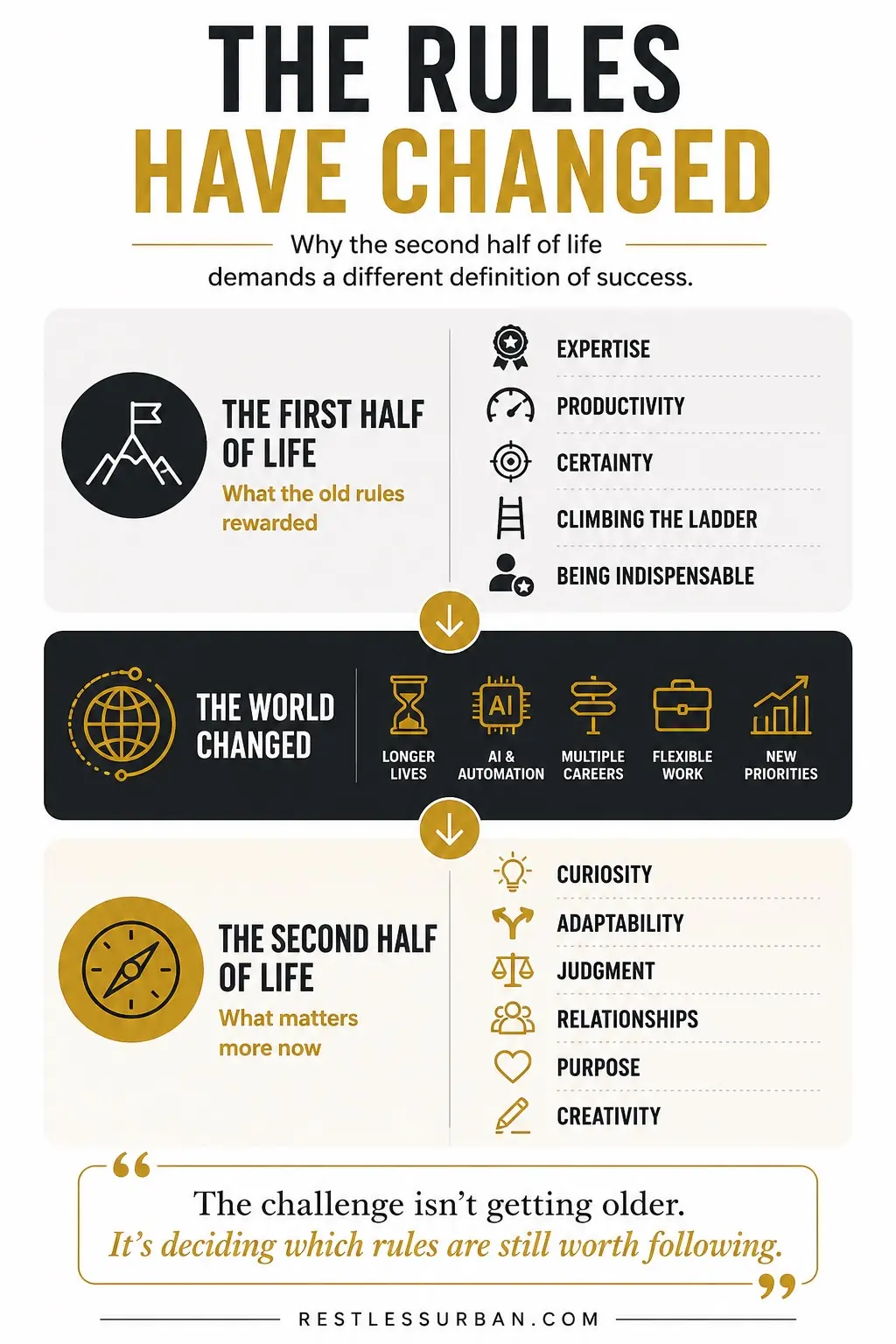
For decades, expertise created advantage because knowledge accumulated slowly. Today, information is abundant, artificial intelligence can generate competent answers in seconds, and industries evolve faster than many careers once did. Experience still matters, but increasingly it is judgment, adaptability, creativity, and the ability to connect ideas that distinguish meaningful contribution.
The same shift is happening outside work.
Longer lives have expanded adulthood itself. A healthy 55-year-old may have another thirty years of contribution ahead, but those years are unlikely to be spent repeating the same playbook that defined the previous three decades.
That is why so many adults over 50 describe this period as both unsettling and unexpectedly liberating. They are not simply asking what comes next. They are questioning the assumptions that shaped what came before.
In Paths To Wellbeing After 50, RestlessUrban found that reinvention rarely follows a predictable blueprint. Some people launch businesses. Others mentor, relocate, volunteer, create, or return to long-abandoned passions. The common denominator isn’t retirement. It’s the willingness to exchange certainty for possibility.

Perhaps Reinvention Begins With Unlearning
Popular culture often celebrates reinvention as though it requires becoming someone entirely new.
A more useful framework may be unlearning.
Not abandoning decades of experience, but examining the assumptions those experiences quietly installed. Does productivity still determine personal worth? Does every opportunity deserve a yes? Is certainty always an advantage in a rapidly changing world? Can contribution exist without status?
These questions are becoming increasingly relevant because adulthood itself has changed. Fifty is no longer the beginning of life’s final act. For many people, it is closer to the midpoint.
Yet much of our thinking still follows a script written for a world in which careers were shorter, retirements were longer, and personal identity remained closely tied to a single profession.
As explored in Life After 50 and the Silent Middle, many adults no longer identify with either traditional retirement or endless ambition. Instead, they occupy a quieter—and perhaps more interesting—space between the two, searching for a version of success that reflects who they are now rather than who they once needed to become.
The New Rules
Perhaps the second half of life doesn’t require a new identity.
Perhaps it requires a new scorecard.
The qualities that built successful careers—discipline, resilience, curiosity, generosity, and judgment—remain invaluable. What deserves reconsideration are the assumptions that often accompanied them: that busyness equals value, that titles define significance, or that achievement is the only meaningful measure of a life.
As RestlessUrban explored in The Generation Brands Have Overlooked, adults over 50 represent one of the most economically influential and culturally underestimated generations in history. The opportunity before them isn’t simply to extend the careers they built. It’s to redefine what those careers were preparing them for.
Every generation inherits a definition of success.
Few are asked to rewrite it while they’re still living it.
Adults over 50 are.
Not because they’re getting older, but because longevity, technology, and changing expectations have quietly transformed what the second half of life can become.
The challenge isn’t keeping up.
It’s deciding which rules are still worth following.


More From the Flip the Script Collection
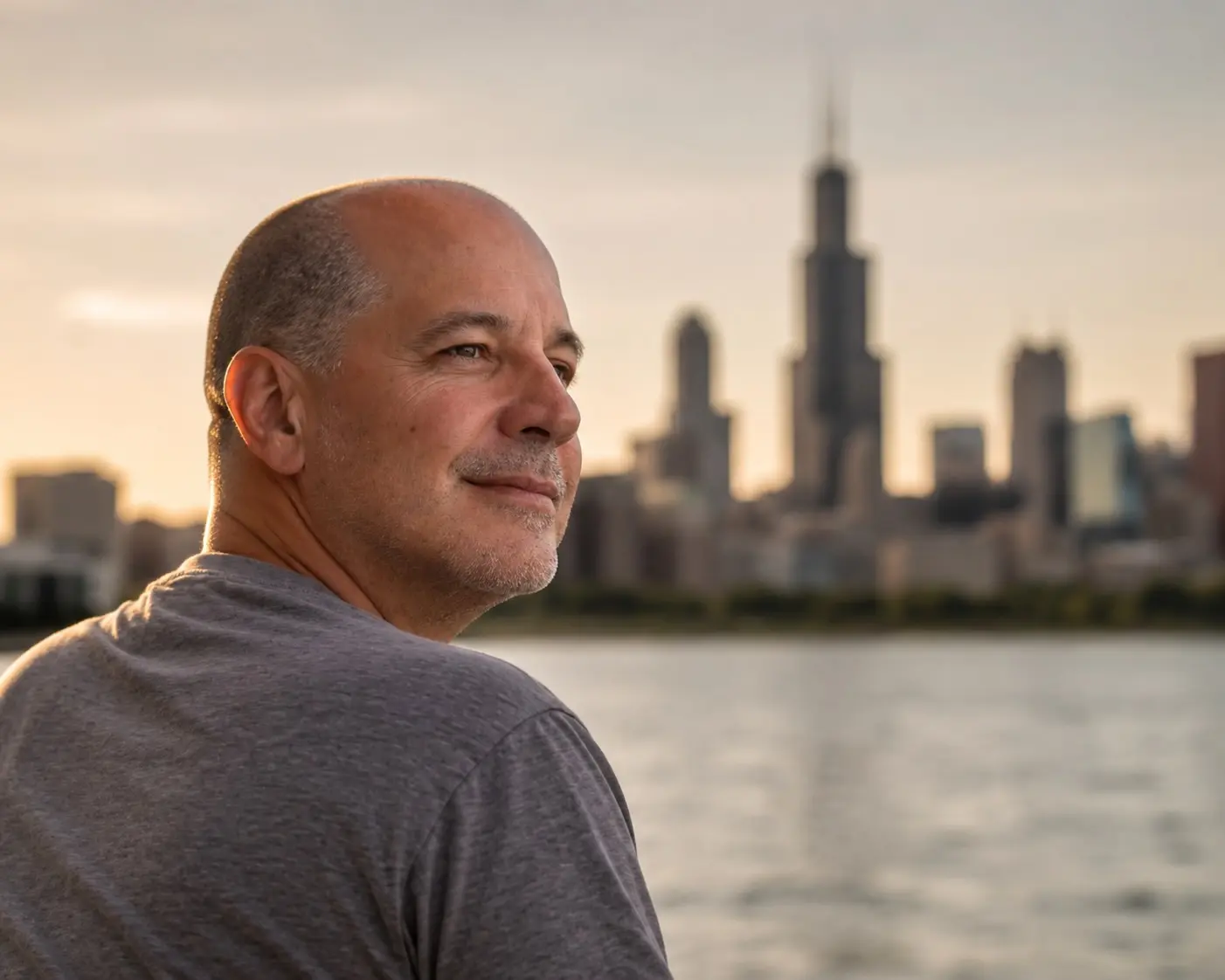
When a career ends, what remains? One executive’s journey from approval to authentic confidence.
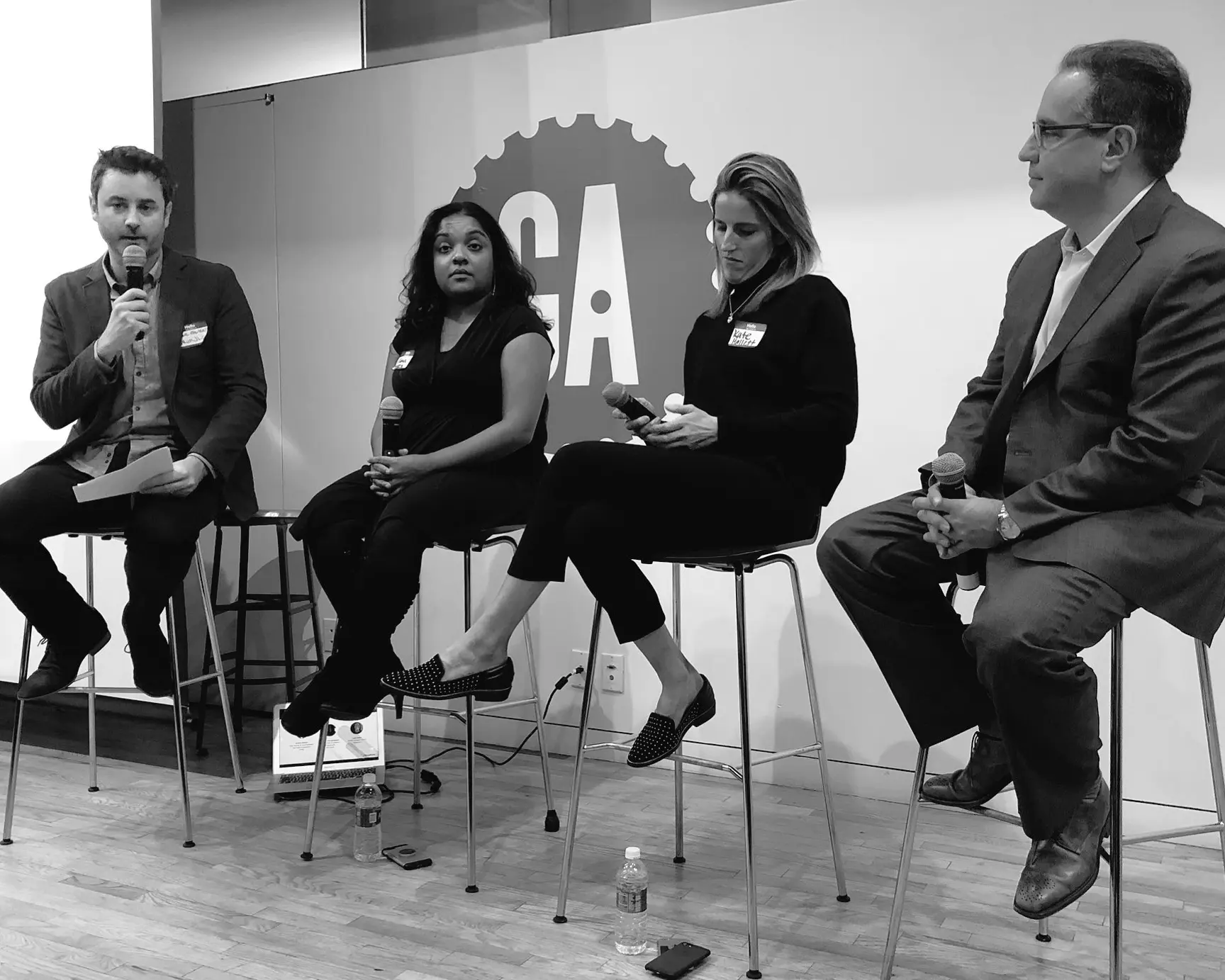
A personal reflection on aging, curiosity, and why experience still matters in the future of work.
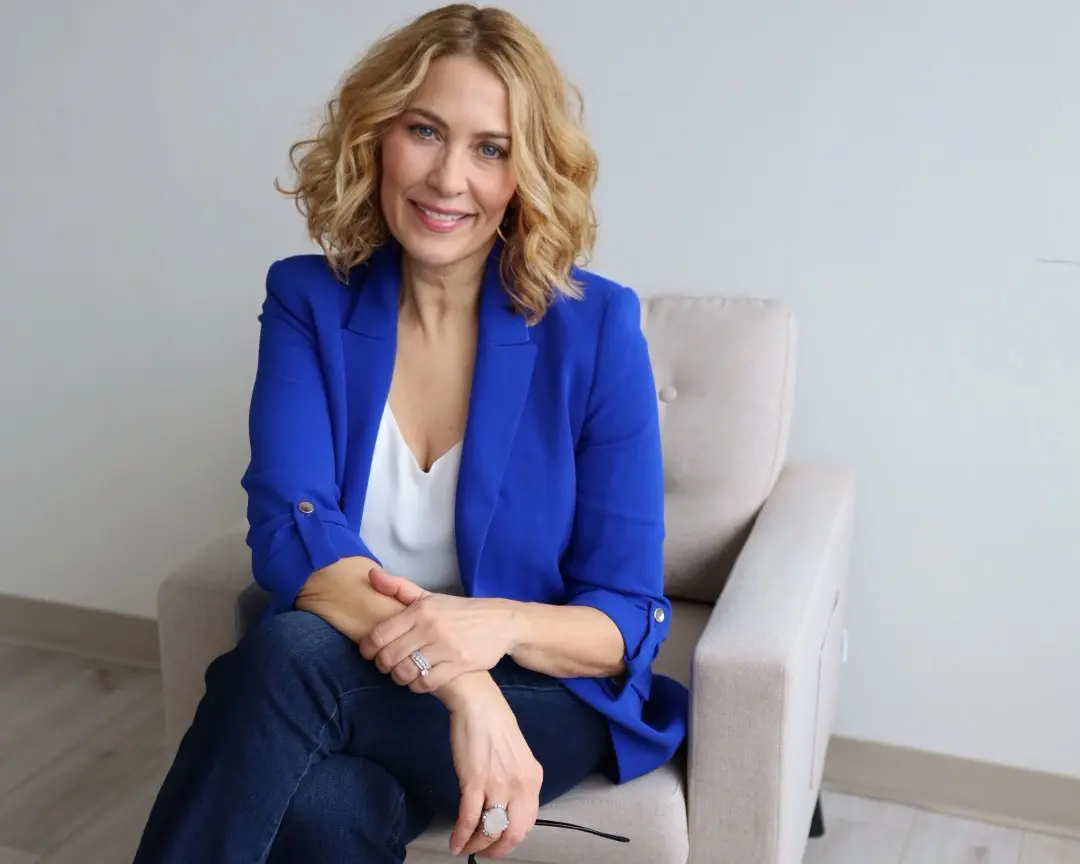
What happens when the life you built no longer fully reflects who you’ve become?
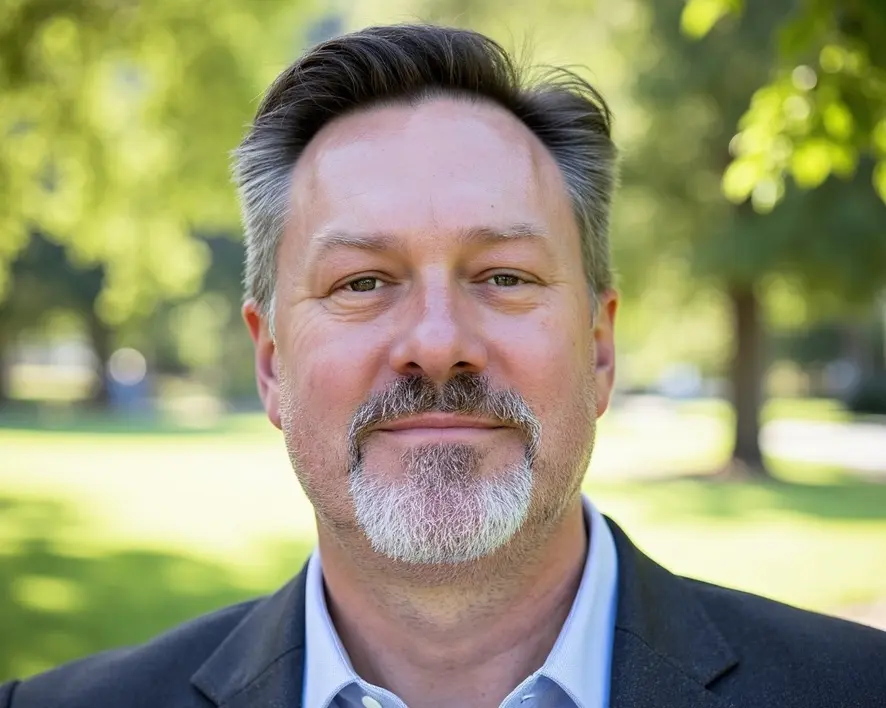
After decades chasing momentum, Aaron Strout found success answered fewer questions than expected.
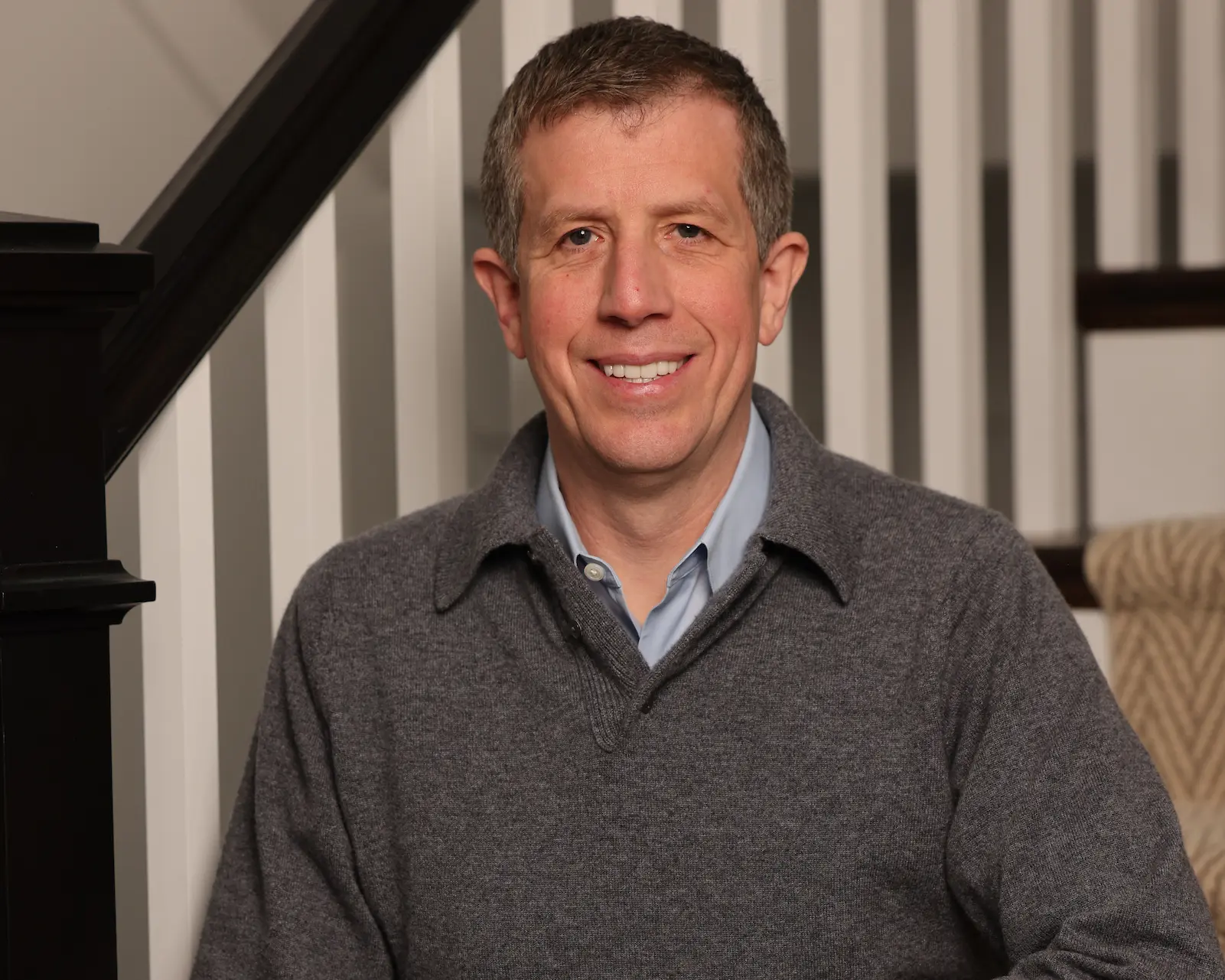
A conversation inspired by Geoff Curtis’s Embracing Your Own Purgatory and the search for purpose after 50.
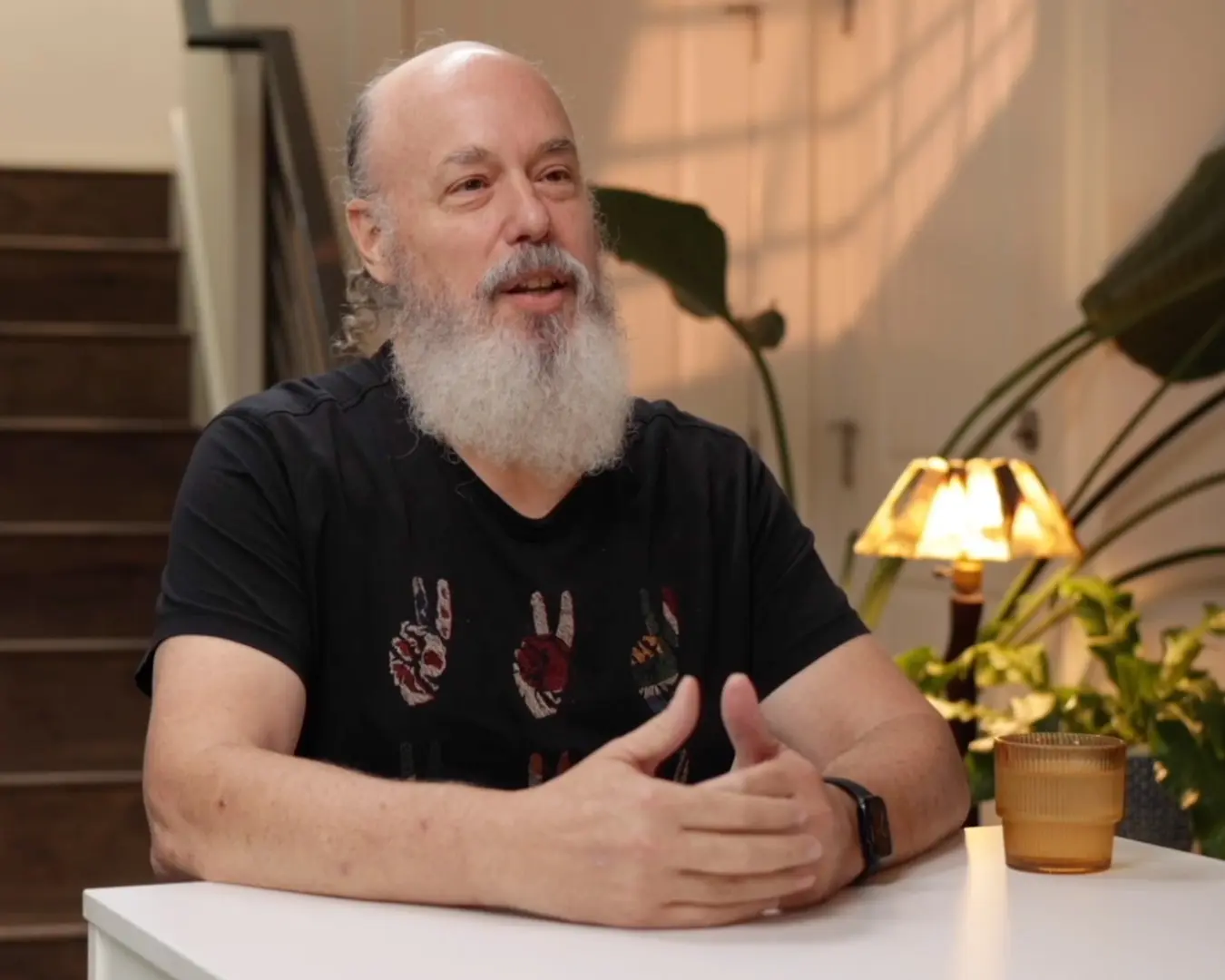
Bob Pearson shows how staying curious turns experience into leverage, impact, and freedom.
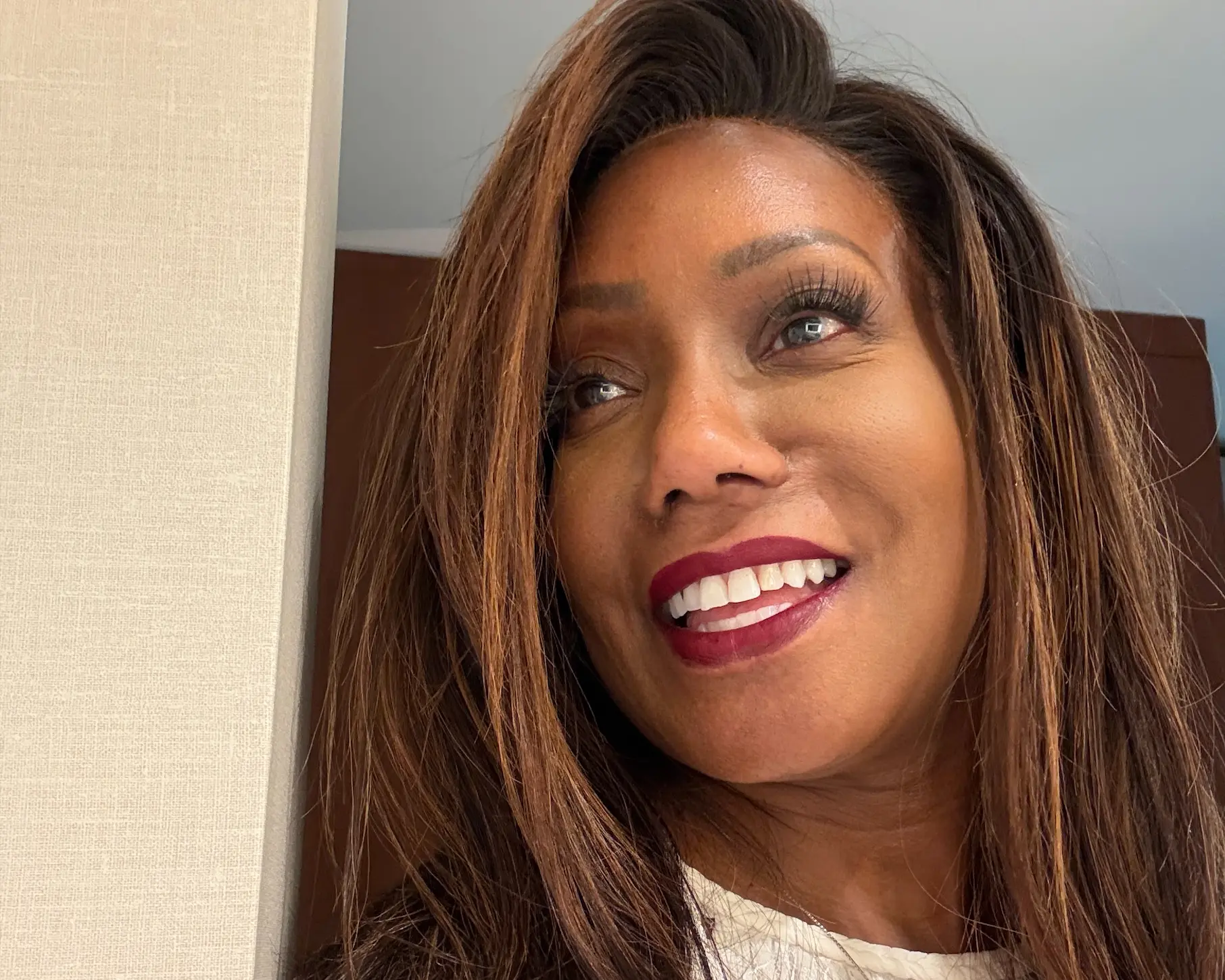
Charlene Wheeless shows how choosing visibility becomes an act of impact, not performance.

Reinvention after 50 isn’t about bravery alone. It’s about money, experience, and knowing when the math works.

Three paths. Real stories. See how people over 50 navigate change, purpose, and possibility on their terms.
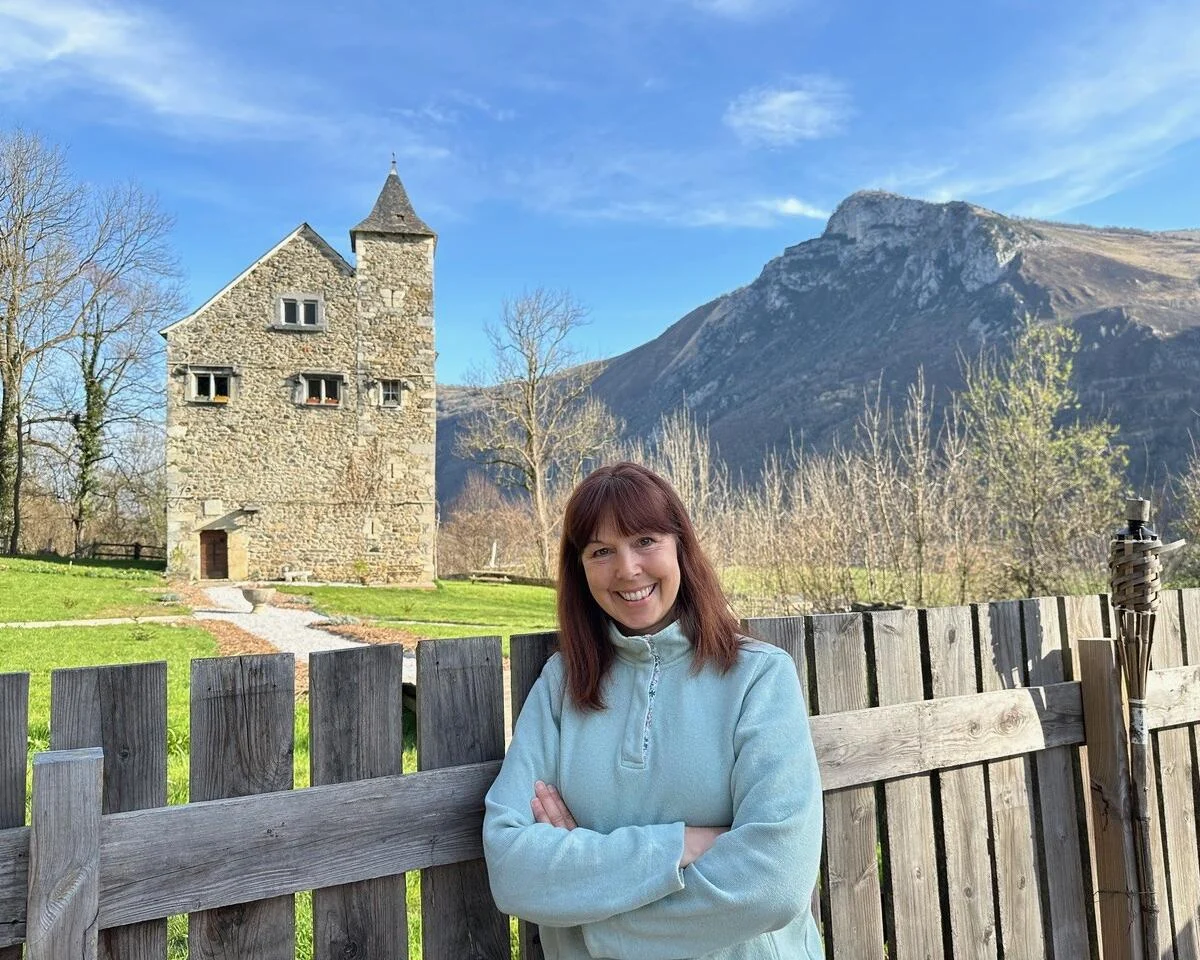
A milestone birthday, a pandemic, and a château spark an unexpected second act in France.
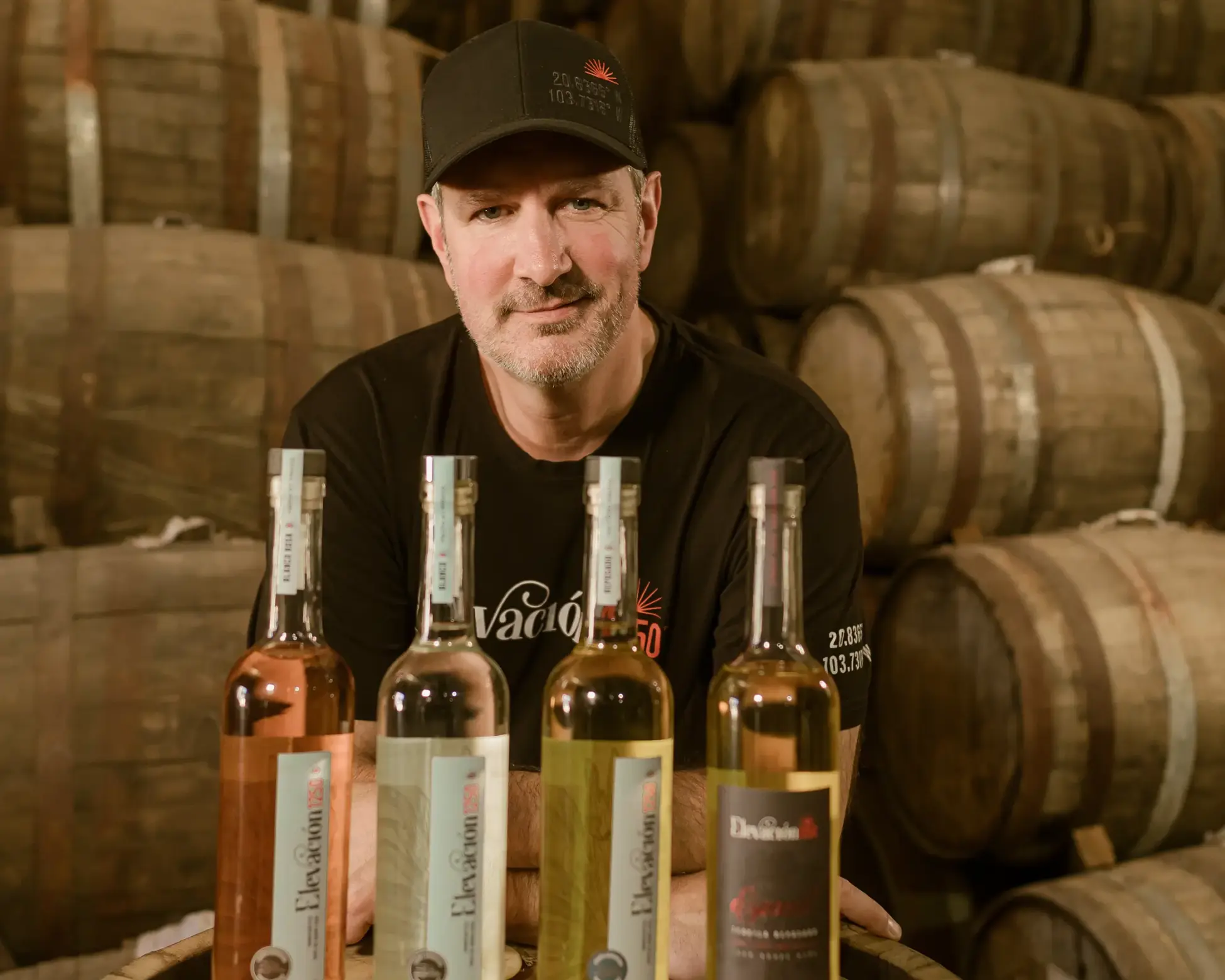
One marketer’s journey from misunderstanding tequila to honoring its heritage becomes his second act.
When the next title stops mattering, one CMO changes the scoreboard and bets on Gen X.

From billion-dollar boardrooms to boutique jam making, one leader redesigns work to finally serve life.
At 58, he walked away from corporate certainty to build a handmade future, one printed card at a time.

A startup leap at 52 changed everything. Scott Morris proves reinvention after 50 is messy, brave, and worth it.

Flip the Script is our new series spotlighting real stories of reinvention, freedom, and choice after 50.

Feeling stuck at 50, Paul Sutton found purpose in helping men speak honestly. His journey proves no one is alone.

How trusting her intuition led to building a mission born from crisis.