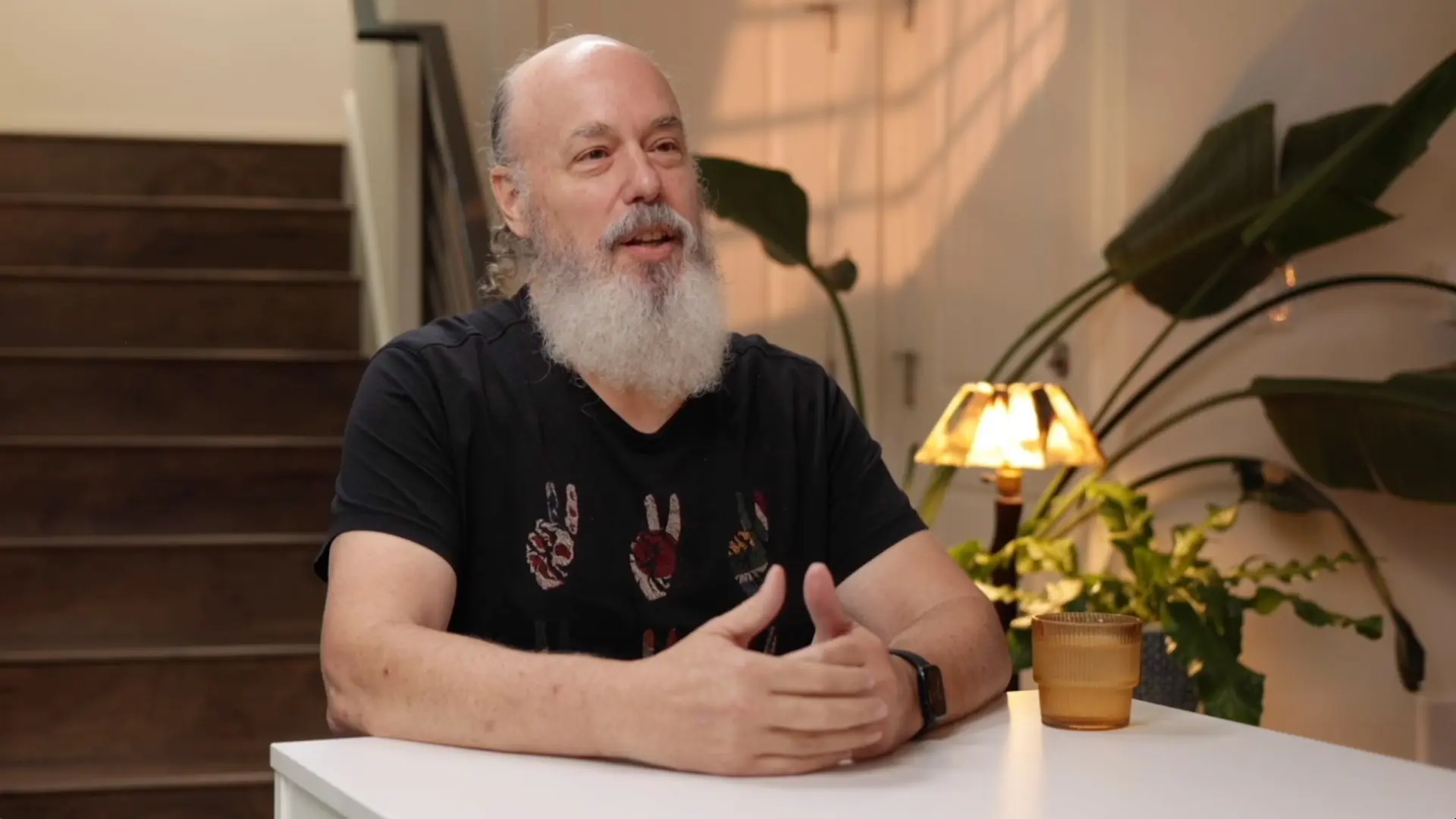

Bob Pearson’s mentors in their seventies and eighties kept telling him the same thing: “My network’s the best it’s ever been. My knowledge is the best it’s ever been.” They showed him something most people miss: Contribution peaks later, not earlier. The corporate ladder leads nowhere nearly as interesting as the work you can do when titles stop mattering.
A prostate cancer diagnosis four and a half years ago accelerated the shift. “A lot of stuff that mattered before just melts away,” he says of those weeks before surgery when the outcome was uncertain. “Friends, family, they matter. Money doesn’t matter. All these material things don’t matter.”
After successful surgery, Pearson quit drinking. Started saying no to climbing ladders and yes to providing value where he’s uniquely skilled. “I don’t need to go chase the dream that everyone thinks I should chase. I should just focus on where I know I can provide the most value.”
Staying ahead of disruption
At 63, he’s writing a book to help people navigate AI in the workplace. Not resume advice. Strategy for staying three years ahead of displacement and navigating the AI-driven world.
The Compass, due out later this year, is designed to land before most professionals realize they need it. That’s his signature move. His first book, Pre-Commerce, was an early predictor in 2011 that everything would move online. He was right. He’s written five books on digital transformation and countering extremism. The Compass is his sixth. His first novel is next.
Between teaching at The University of Texas at Austin, consulting for the U.S. government on what’s next in media and technology, good and bad, advising CEOs, serving on corporate and nonprofit boards, and working with health AI startups, he’s doing it again.
That’s what Pearson does. He wasn’t a one-hit wonder. At GCI, he started as Employee No. 1 with nothing but a desk and a plant, tasked by Grey Advertising/GCI Group to build a unique healthcare PR agency from scratch. At Dell in 2006, his team built IdeaStorm, where customers voted on ideas that helped shape the next generation of products. At W2O Group (now Real Chemistry), where he served as vice chairman, president, and chief technology officer, he helped scale the firm tenfold in nine years powered by algorithms that could identify the exact influencers shaping any market or any topic in any country.
What he can do now that he couldn’t at 45: “When I’m advising a company, it could be anything. How they staff up, how they raise money, how they operate, how they let someone go. I’ve been through it so many times that you have a sixth sense right away when you hear something.” He can see immediately who will embrace change and who won’t.
“There is no age of retirement. You actually have more to give back later in your career than you ever did when you were younger,” he adds.
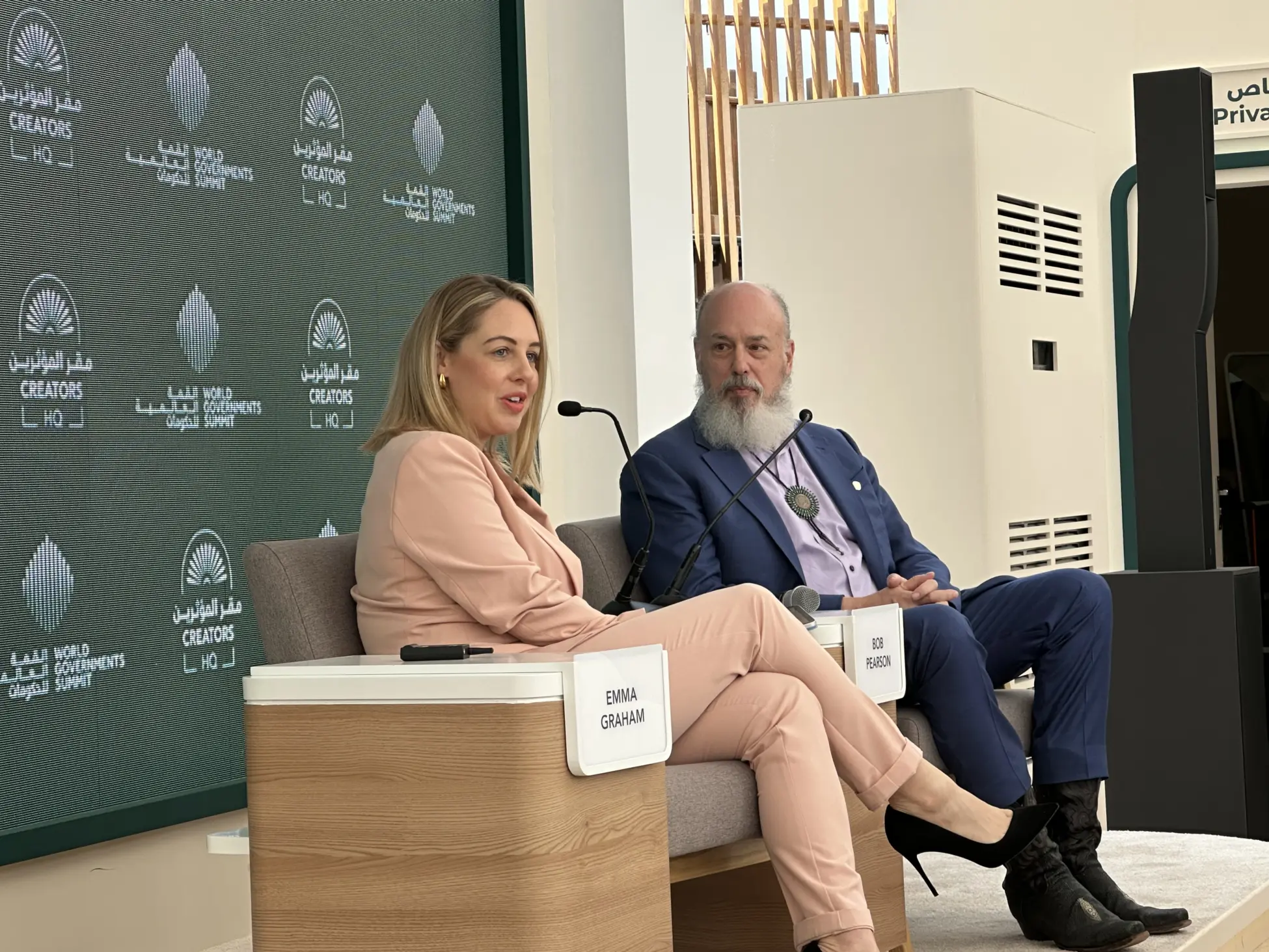
Bob Pearson in Dubai at the World Governments Summit with CNBC Bureau Chief Emma Graham.
A life with fewer uniforms
He wore suits, ties, and cufflinks early in his career. Once he moved to Austin 19 years ago, he started wearing jeans and cowboy boots to work and the wardrobe now includes T-shirts. He doesn’t own a tie.
“I don’t like doing what everyone else does. It’s a sense of freedom for me.”
He’s been married 36 years to Donna, an accountant who brings pragmatism to balance his restless creativity. She asks why. That makes him slow down and explain. “Sometimes the idea falls apart. Sometimes the idea continues. But we need more people asking why.”
Financial runway from decades of corporate income. Two grown daughters. Nicole, 32, works at an Austin law firm while attending Syracuse Law online and raising three kids. Brittany, 29, works as director of integrated media planning at Real Chemistry with her MBA and a one-year-old.
With everyone living in Austin, there are regular family get-togethers.
“When you have four grandsons running around 6, 5, 2, and one, there’s part of your brain is just watching them, making sure they’re not jumping into something crazy,” he says. “Our family still shares music with each other every week. So my favorite country songs or rap songs or rock and roll songs, they often come from our daughters.”
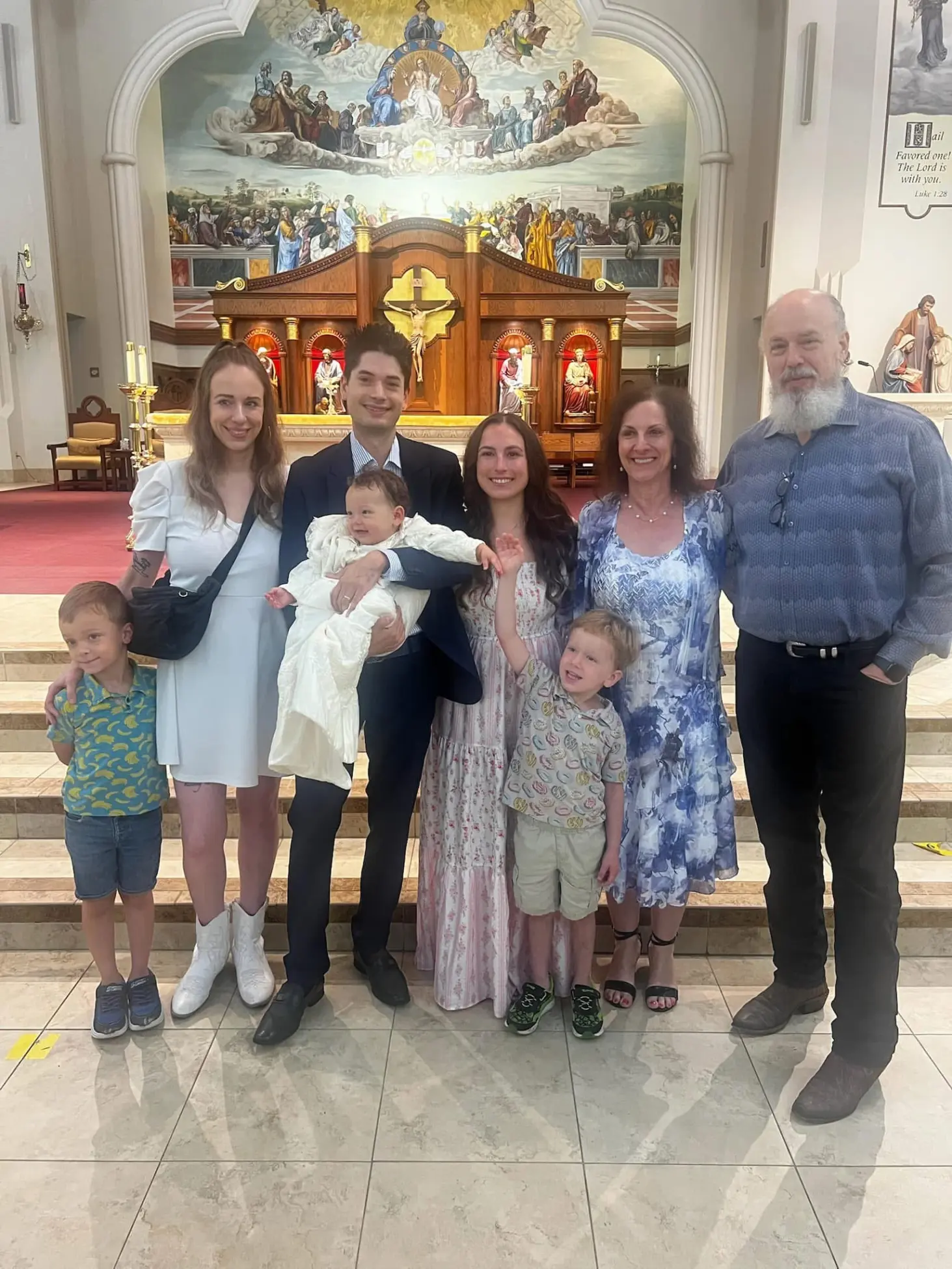
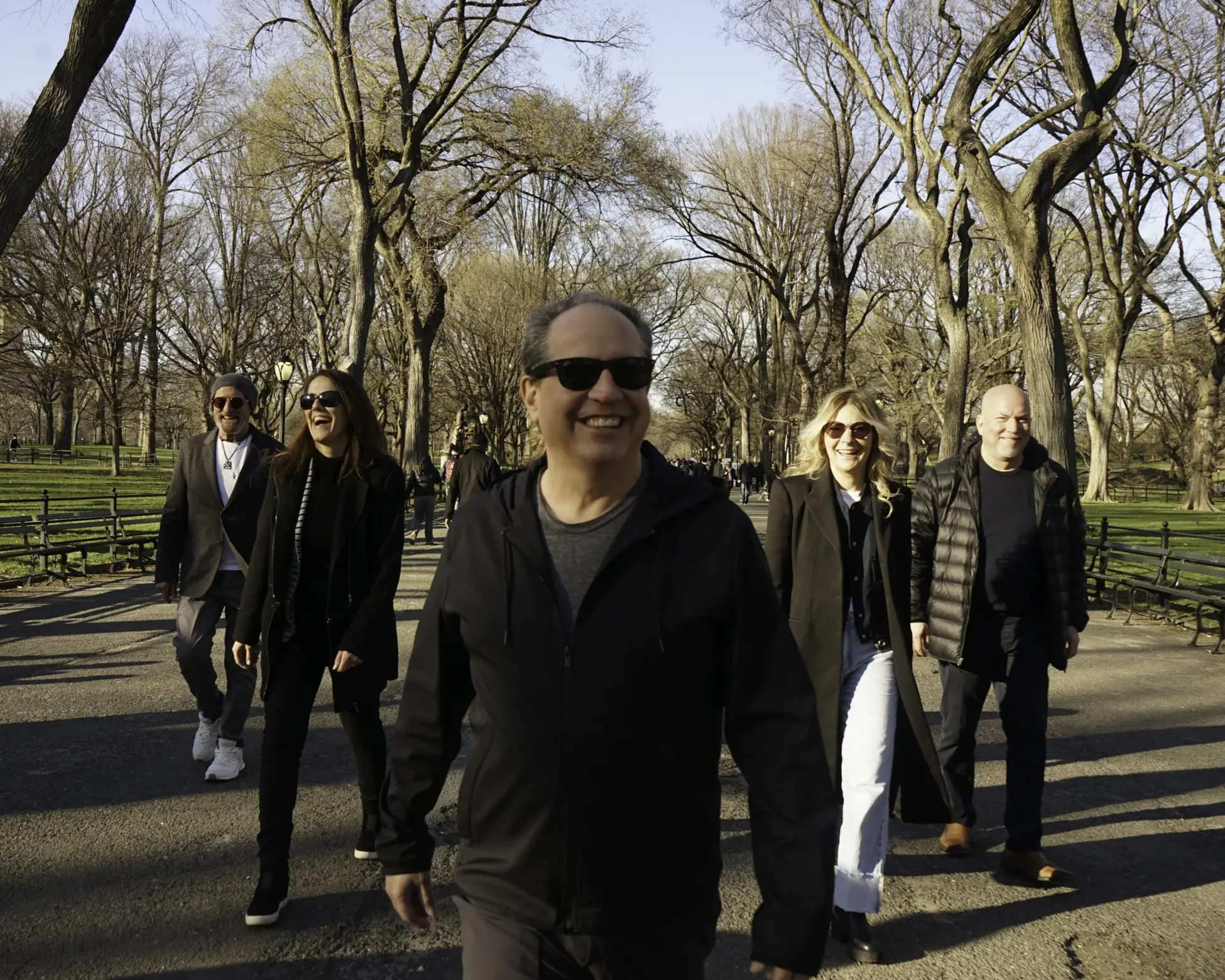
Bob, seen here with his wife, Donna, their two daughters, son-in-law, and grandchildren.
Staying human
At 25, Pearson took what he calls a “right turn” into sales for two and a half years because he knew he needed to learn how to read people. “The skills are with me to this day,” he says. “You just learn how to listen.” He picked the worst territory in the country and flipped it to #1 in his district in 18 months.
Friends compare him to Rick Rubin, the legendary music producer who understands every instrument, knows how to inspire artists, sees the whole process. Pearson says the business version is “understanding the big picture, building narratives that move needles, and coaching from the side to get the band playing right. Plus we have beards that look similar.”
His upcoming book addresses how professionals can stay ahead of AI rather than be displaced by it. “When you use AI well, it helps you become the smartest version of yourself,” Pearson explains. But he’s adamant about what humans must retain: “We can’t lose the skill of editing and asking good questions. Those are even more important in the AI era.”
The restlessness extends beyond AI. When he discovers a band he’s never heard, he studies what makes the band special. He talks about how Led Zeppelin’s Jimmy Page was a pioneer in production (and guitar), while drummer John Bonham shaped their sound. “For me it’s a way to understand how they create, a similar skill to help explain things that are often very complex to other people in the business world.”
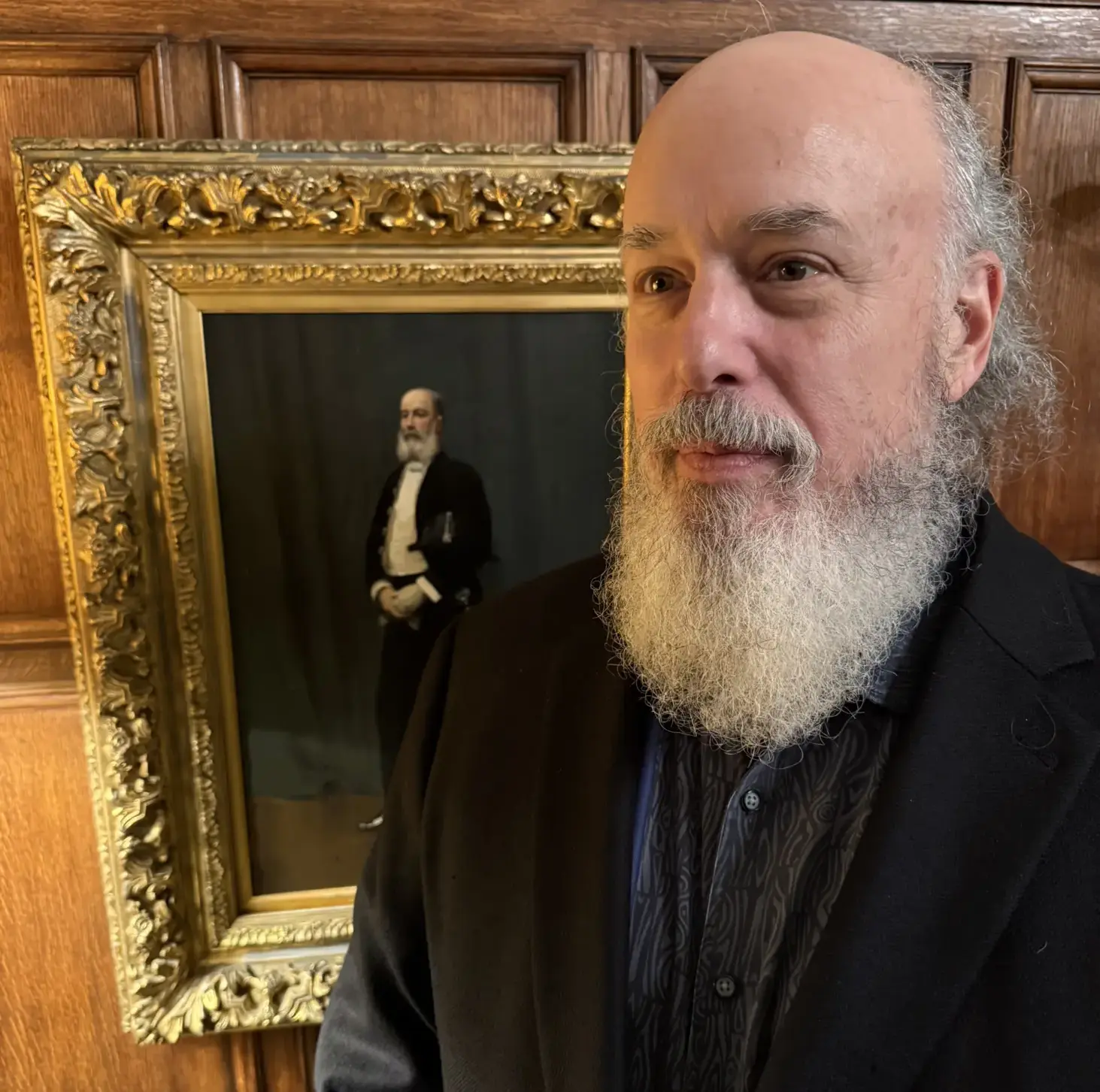
In Scotland, at a castle outside Edinburgh, Bob realizes a centuries-old painting looks just like him.
Don’t peak early
The most important thing? “Being curious forever,” Pearson says. “And giving back.”
Pearson pushes back hard against peers and younger executives who delay committing to volunteering. His advice is concrete: Pick up the phone. Join one board. Teach one class. Take one right turn into something that scares you. Stop waiting for the perfect moment.
He’s focused on what he’s building: Courses for the next generation, advisory work for health AI firms expanding cancer treatment access, books that land ahead of disruption, time with daughters and grandkids.
That’s the lesson he wants people to take from his story: you don’t peak early. You peak when your network is deepest and your pattern recognition sharpest. The work gets better. The impact grows.
More From the Flip the Script Collection

The casualties aren’t just adults over 50. They’re the companies who missed the memo.
Losing a job after 50 shouldn’t mean reinventing who you are. Maybe it’s the system that needs to change.
The rules of work have changed. Why do we still believe our best work is behind us?
The rules have changed. Read why millions of experienced professionals are redefining work, purpose and what’s next
Explore why success itself may be the hardest habit to leave behind.
When a career ends, what remains? One executive’s journey from approval to authentic confidence.
A personal reflection on aging, curiosity, and why experience still matters in the future of work.
What happens when the life you built no longer fully reflects who you’ve become?
After decades chasing momentum, Aaron Strout found success answered fewer questions than expected.
A conversation inspired by Geoff Curtis’s Embracing Your Own Purgatory and the search for purpose after 50.
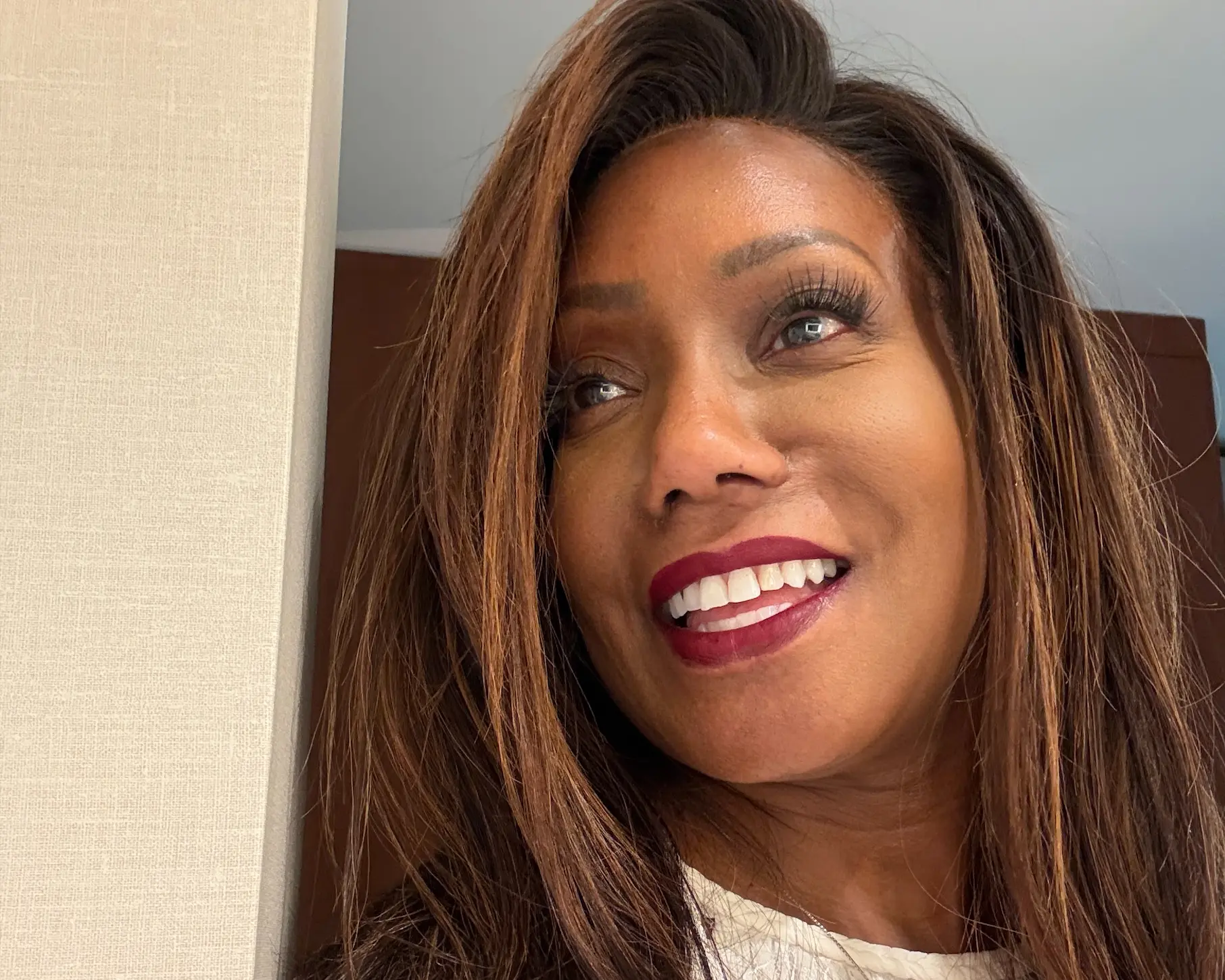
Charlene Wheeless shows how choosing visibility becomes an act of impact, not performance.

Reinvention after 50 isn’t about bravery alone. It’s about money, experience, and knowing when the math works.

Three paths. Real stories. See how people over 50 navigate change, purpose, and possibility on their terms.
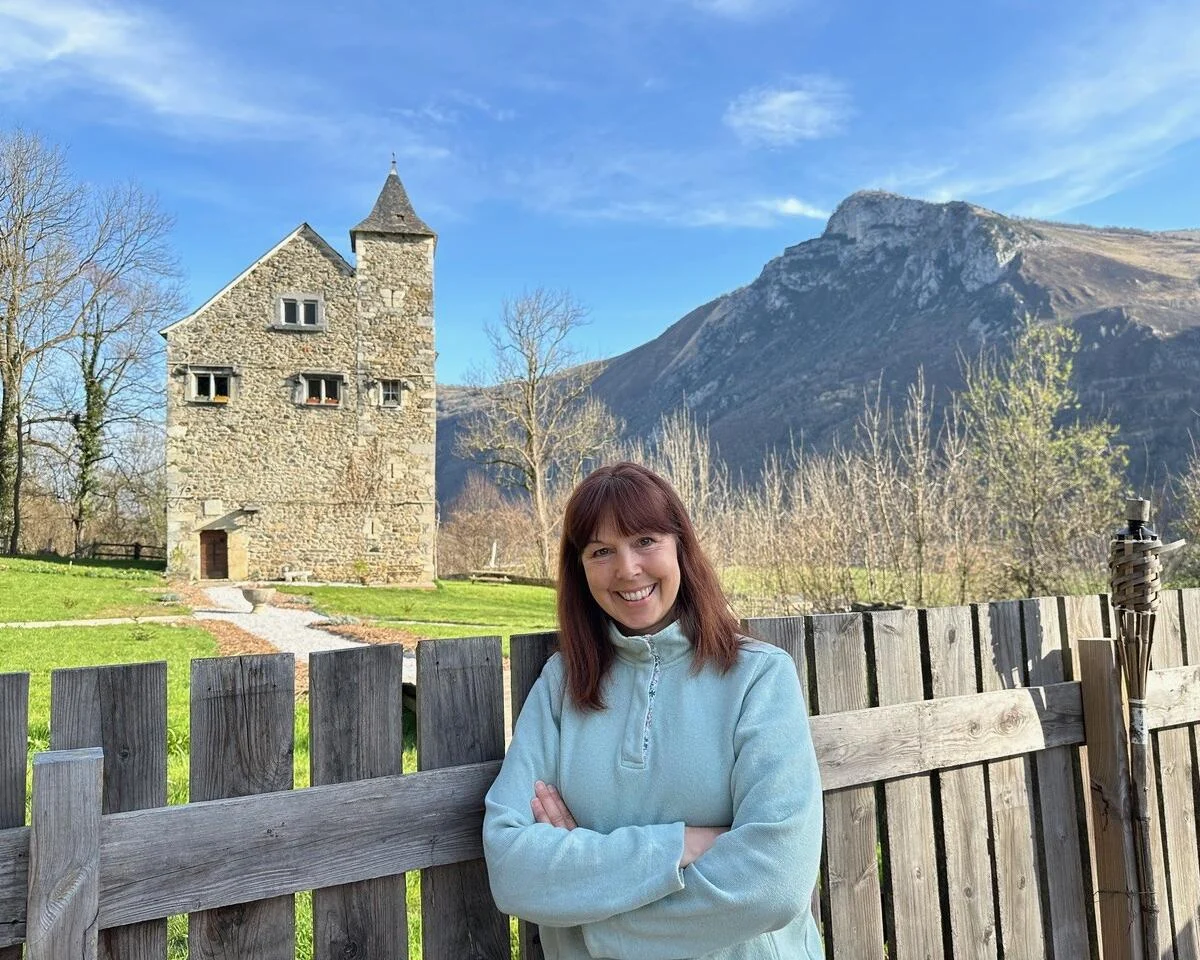
A milestone birthday, a pandemic, and a château spark an unexpected second act in France.
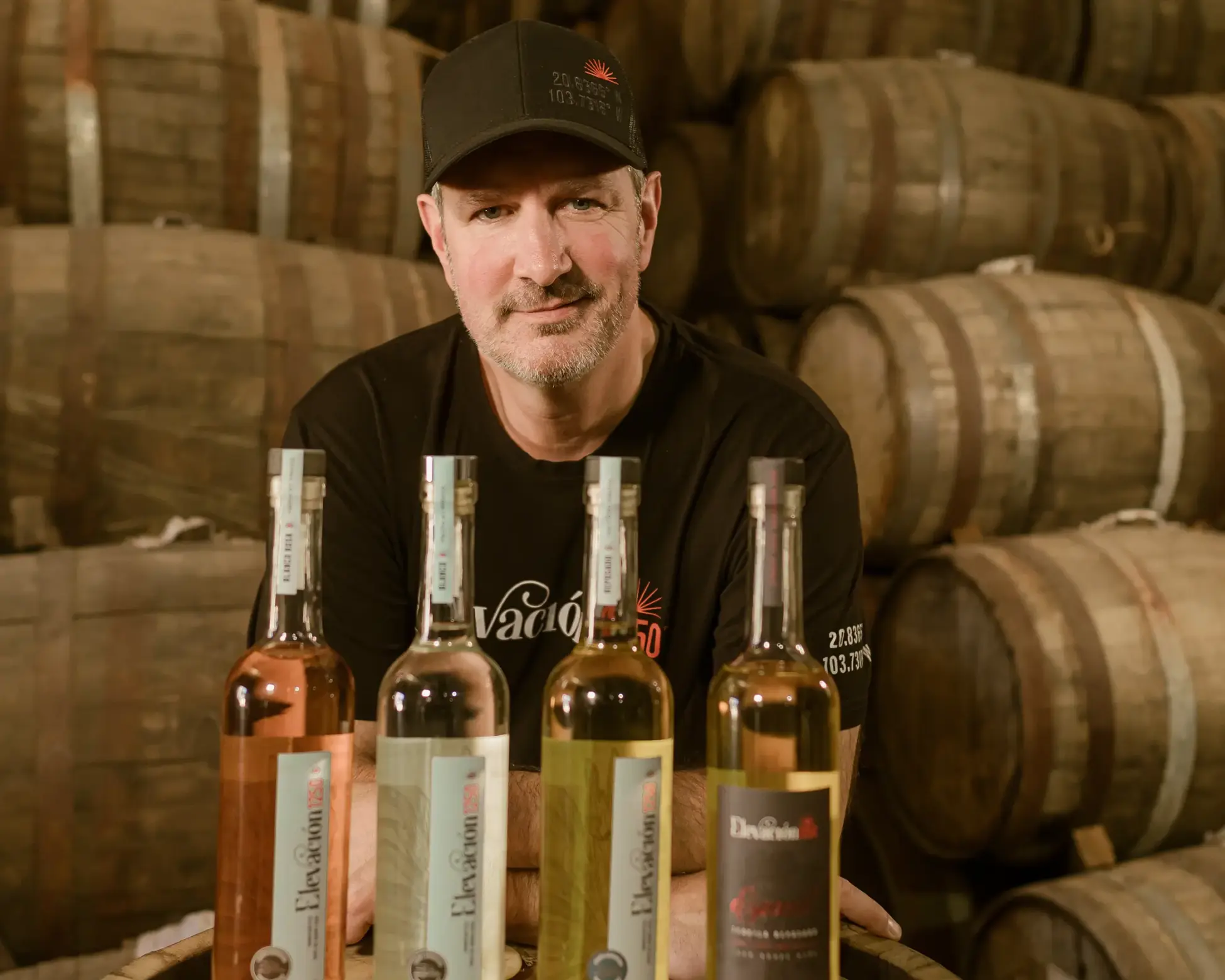
One marketer’s journey from misunderstanding tequila to honoring its heritage becomes his second act.
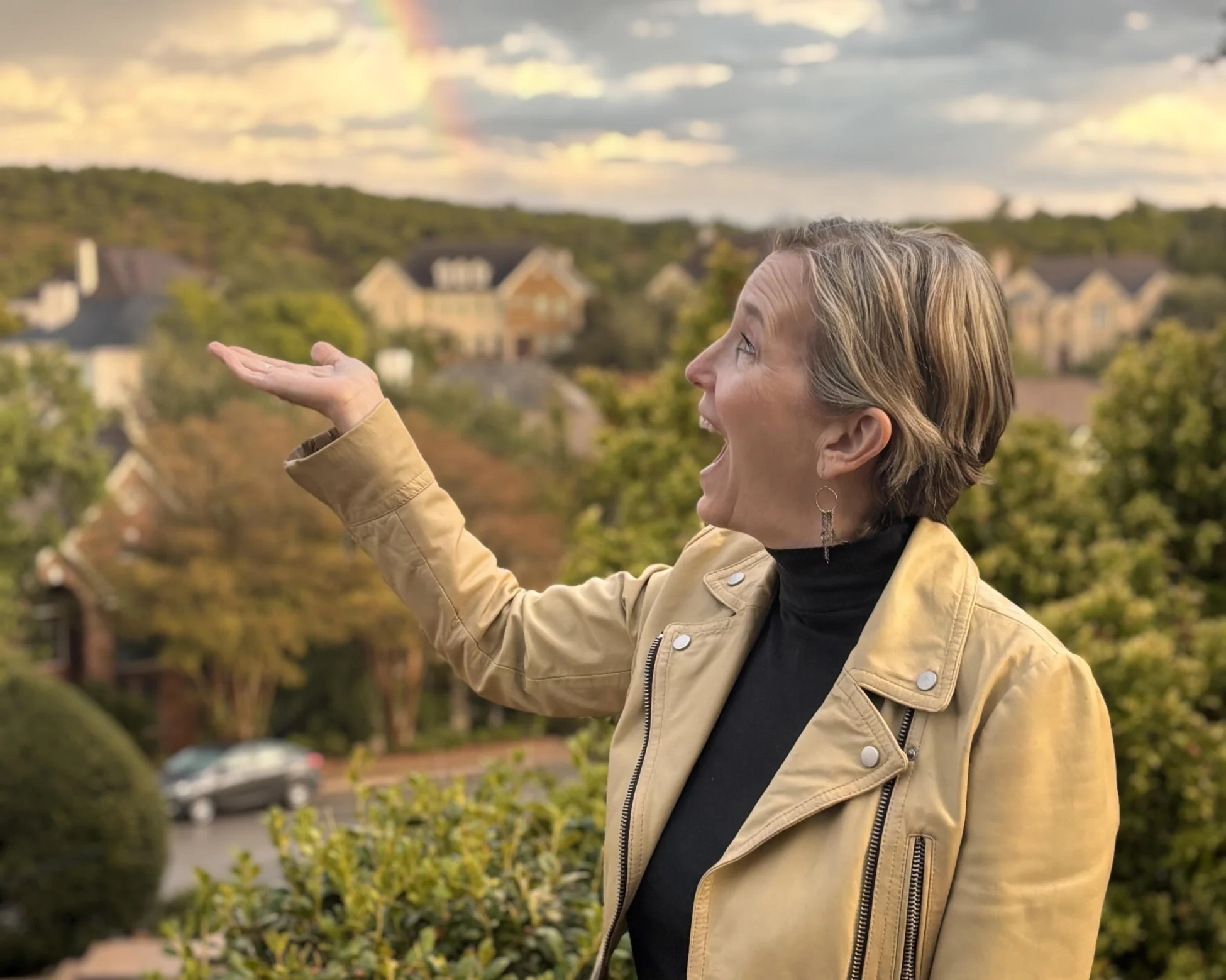
When the next title stops mattering, one CMO changes the scoreboard and bets on Gen X.

From billion-dollar boardrooms to boutique jam making, one leader redesigns work to finally serve life.
At 58, he walked away from corporate certainty to build a handmade future, one printed card at a time.
Her daughter said four words that changed everything. Faith Jennings left a VP career and chose life instead.

A startup leap at 52 changed everything. Scott Morris proves reinvention after 50 is messy, brave, and worth it.

Flip the Script is our new series spotlighting real stories of reinvention, freedom, and choice after 50.

Feeling stuck at 50, Paul Sutton found purpose in helping men speak honestly. His journey proves no one is alone.
Singer-songwriter Dean Brandsma rewrites his life’s soundtrack. Hear the story behind the song Crossroads.

How trusting her intuition led to building a mission born from crisis.
Music changed my life. Playing guitar helped me heal, grow stronger, and embrace change.