The shift from effortless sleep to intentional rest
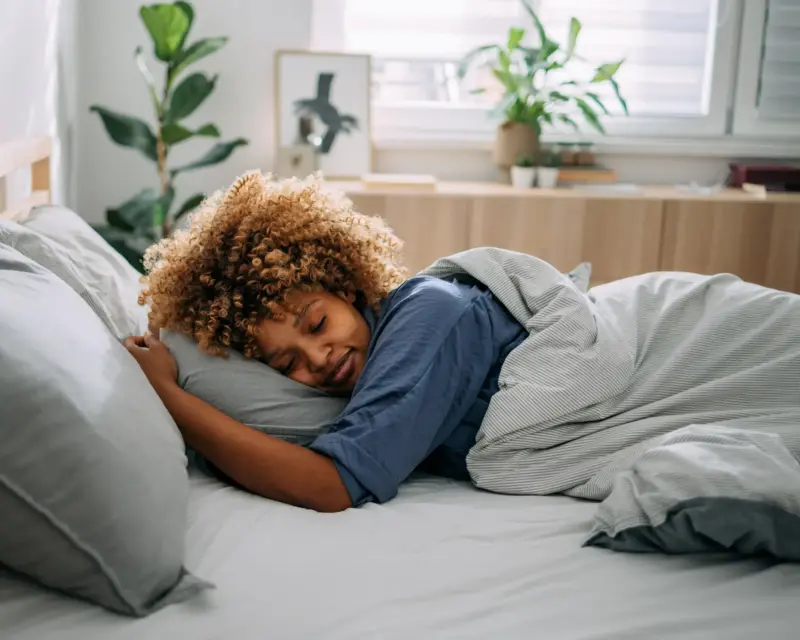
I used to be able to sleep on demand. Anywhere, anytime, through anything. I was the person who could fall asleep mid conversation if I was tired enough, who slept through fire alarms in college, who considered I will rest when I am dead a perfectly reasonable philosophy. Sleep was never a goal. It was just something that happened when I closed my eyes.
That version of me feels like a different person now.
The shift started five or six months ago. Hot flashes jolting me awake at two in the morning. Lying there in the dark, mind racing with anxiety about nothing and everything. The cruel irony of being exhausted yet unable to fall back asleep. Suddenly, sleep became something I had to pursue rather than something that simply happened.
Now I have a lineup. A whole set of must haves that stand between me and a solid seven to eight hours.
Tools that make sleep possible
Cozy Earth Sleep Mask – The sleep mask was the first addition. Light sensitivity became a thing seemingly overnight, or more accurately, after 45. Even the glow from the alarm clock bothered me. The thin strip of streetlight creeping under the blackout curtains felt like a spotlight. The mask solved it, though I never imagined I’d become someone who couldn’t sleep without a piece of fabric over her eyes.
Dentek Mouth Guard – Then there’s the mouth guard. That one’s been in rotation longer, probably since I was 19 or 20, when life stress first manifested as grinding teeth. By 22, when I landed my first full-time corporate job, the grinding became my signature stress response. My dentist said I had the jaw strength of someone who chewed rocks for a living. Thanks, Corporate America. The mouth guard is non-negotiable now. Without it, I wake up with a headache that radiates from my jaw to my temples.
Dreamegg Portable White Noise Sound Machine – The sound machine is probably the strangest necessity because I didn’t even realize sound was part of my sleep equation. I’d always slept with a fan running; the white noise hum was just part of the background. But at some point, that ambient sound became essential rather than incidental. Now, I literally cannot fall asleep in complete silence. I’ll even wake up if the sound machine turns off in the middle of the night, suddenly alert in the quiet like someone hit an alarm.
OLLY Sleep Supplements – And finally, the supplement stack: hormone replacement therapy (HRT), magnesium, Olly Sleep gummies. This trifecta is the newest addition, all coming together over the last seven or eight months as my body decided to betray everything I thought I knew about it. The supplements play a huge role. Without them, I’m back to staring at the ceiling at 3 AM, spiraling.

Sleep rituals
Talking with friends about peri menopause recently made me realize how elaborate my sleep ritual has become. We swapped stories about hot flashes, night sweats and the particular hell of being bone tired but wide awake. That is when it hit me. I have built an entire infrastructure around rest.
And I am not ashamed of it. I love my tools. I love the ritual. There is power in knowing what works and in understanding my body well enough to give it what it needs.
Why sleep is the new health metric
When I do not get my sleep, everything feels off. My emotions are unstable, my thoughts are foggy, my energy is nonexistent. Sleep affects everything. My patience, my clarity, my ability to handle even minor inconveniences. I used to believe I could power through the day on four hours of sleep and willpower. Now I know better.
It is a strange pivot. For years I was obsessed with getting to the gym at four thirty in the morning, crushing workouts, pushing harder. Rest and recovery were not part of the equation. I wore my lack of sleep like a badge of honor.
Now in my fifties I have learned what my forties tried to teach me. Rest is part of the health equation. Recovery matters. Sleep matters. Taking care of the body that has carried me through decades of grinding and striving matters.
So yes, sleep is a goal now. A goal that requires a sleep mask, a mouth guard, a sound machine and a small pharmacy of supplements. And I am okay with that. Because when I get those seven to eight hours, with all my tools in place and my ritual complete, I wake up feeling like myself again.
The me who can handle whatever the day brings. Just slightly better equipped than the version who thought rest was optional.
5 truths about rest
1. Sleep changes are not failure. They are evolution
Your body’s needs shifting in your 40s and 50s, especially with peri menopause, does not mean something is wrong. It means you are adapting. What worked at 30 will not necessarily work at 50.
2. Rest is part of the health equation
If you have been grinding with an I will rest when I am dead mentality, it is time to reframe. Recovery is just as critical as workouts. You cannot outwork poor sleep.
3. Building a sleep ritual takes time
Tools like supplements, sound machines, masks and mouth guards come together gradually. You are not high maintenance for needing them; you are self aware for finding what works.
4. Poor sleep affects everything
Sleep deprivation impacts emotional regulation, mental clarity, decision making and energy. When you prioritize sleep, everything else gets better.
5. Knowing what works is power
Understanding your body well enough to support it is an act of self care and agency. Your sleep tools are not crutches. They are solutions.
More Reviews about Wellbeing

A free mini-course for adults over 50 who want to open new doors and rethink what’s next.

Discover wellness essentials for adults over 50 with trusted products for fitness nutrition and clarity.

Discover trusted reviews, curated picks and quality-tested finds that support your well-being and goals after 50.

The robotic lawnmower is perfect for those 50 and up who would prefer to do anything other than cut the lawn.