For most of adulthood, we’re taught to build a career. Find a lane, get good at something, move up, earn more and, eventually, reach the point where work becomes optional.
It’s a remarkably durable idea of success. It’s also beginning to feel incomplete.
Across the country, people in their 50s and 60s are changing jobs, starting businesses, consulting, moving into part-time work or assembling some combination of all of the above. Some are doing it because they have to. Others are discovering that decades of work have left them with something they didn’t necessarily have at 30 or 40: experience, relationships, judgment and, for some, enough financial breathing room to make different choices.
Maybe the question after 50 isn’t simply, “What’s my next job?” Maybe it’s what becomes possible when a job is no longer the only measure of a productive life.
The Startup Founder Isn’t Necessarily 25
We still have a remarkably youthful picture of entrepreneurship. Think hoodie, laptop, venture capital and someone young enough to regard an all-nighter as a perfectly reasonable business strategy.
The data tell a different story.
Kauffman Foundation figures released in May show that Americans ages 45 to 54 started businesses at a monthly rate of 0.43% in 2025, compared with 0.26% among adults ages 20 to 34. People ages 55 to 64 came in at 0.37%, also ahead of the youngest group.
Even more interesting is why. Among new entrepreneurs ages 55 to 64, 87.2% were classified as “opportunity entrepreneurs,” meaning they had not been unemployed and looking for work immediately before starting their businesses. It was the highest share of any age group Kauffman measured.
This doesn’t mean 58 is the new 28. Frankly, why would we want it to be?
Being 58 comes with advantages 28 cannot manufacture: industry knowledge, relationships, pattern recognition, mistakes you’ve hopefully learned from and a better sense of which problems are worth your time. For some people, years of saving and investing provide another advantage: the ability to take a calculated risk without betting everything on it.
That’s less about reinvention than leverage.
We’re Rearranging the Pieces
Entrepreneurship is only part of the story. An AARP survey found 24% of workers 50 and older planned a job change in 2025, up from 14% the previous year. Among those contemplating a move, 16% planned to start a business and 12% planned to shift from full-time to part-time work, triple the previous year’s share.
There’s an important reality check here. Money was the leading motivation for changing jobs. Millions of Americans keep working because they need the income, while caregiving, healthcare costs, inadequate savings, layoffs and age discrimination can narrow the available choices considerably.
Still, something in those numbers is worth noticing. The old choice between career and retirement doesn’t describe everyone anymore. An executive becomes a consultant. An employee starts a business. Someone works three days instead of five. Another person earns money doing one thing, finds purpose doing another and finally has more time for the people who matter.
It might look messy on a résumé. It can make considerably more sense as a life.

From Career Capital to Life Capital
For years, we accumulate what might be called career capital: expertise, reputation, relationships, credibility, money and judgment. We’re trained to use those assets vertically. Each accomplishment should somehow lead to the next one.
But eventually those assets can travel in other directions.
Experience can become a board seat or consulting practice. Relationships can help launch a business. Savings can buy room to experiment. Expertise can help somebody younger avoid a mistake you already made. Curiosity can take you back into a classroom even when there is no credential, promotion or obvious payoff waiting at the end.
Call that life capital.
The idea is deceptively simple: perhaps everything we accumulated during our careers doesn’t have to be spent on another career.
That can be difficult to absorb in a culture that has become exceptionally good at turning life into a productivity exercise. We walk, but count the steps. We sleep, but score the sleep. Hobbies become side hustles. Somewhere along the way, even having fun started sounding as though it needed an ROI.
Maybe one advantage of getting older is realizing that some things are allowed to matter simply because they make life better.
And Don’t Forget the People
Work also gives us something we often don’t appreciate until the structure changes: a built-in social network.
The desire to keep expanding that network doesn’t disappear after 50. A University of Michigan national poll found 75% of adults 50 and older were interested in developing new friendships, even though 42% said making friends was harder than when they were younger.
That belongs in a conversation about careers because whatever comes next can’t be built entirely from professional accomplishment. A good life needs old friends and new ones, family, partners, neighbors and communities where nobody is especially interested in what your title used to be.
Maybe the Ladder Wasn’t the Point
None of this is a prescription for how to age successfully. The freedom to choose is a privilege, and it is unevenly distributed. Plenty of people reach their 50s needing more work, not less.
But for those navigating a transition, there’s value in questioning the assumption that whatever comes next should resemble whatever came before.
The career ladder made progress wonderfully easy to measure. More responsibility, more money, a bigger title and, once upon a time, a bigger office. After 50, progress can become harder to quantify and a lot more personal.
It might mean building a company while serving on a board. Consulting while studying something completely unrelated. Investing, mentoring, traveling, volunteering or finally becoming mediocre at something you happen to love.
Maybe you don’t need to reinvent yourself at all. You may simply have more ways to use the person you’ve already become.
And perhaps that’s the return on a long career we’ve underestimated: not another title, but enough knowledge, relationships, resources and self-awareness to make choices that weren’t available before.
For years, we ask how far a career can take us.
After 50, the more interesting question may be where everything it gave us allows us to go next.
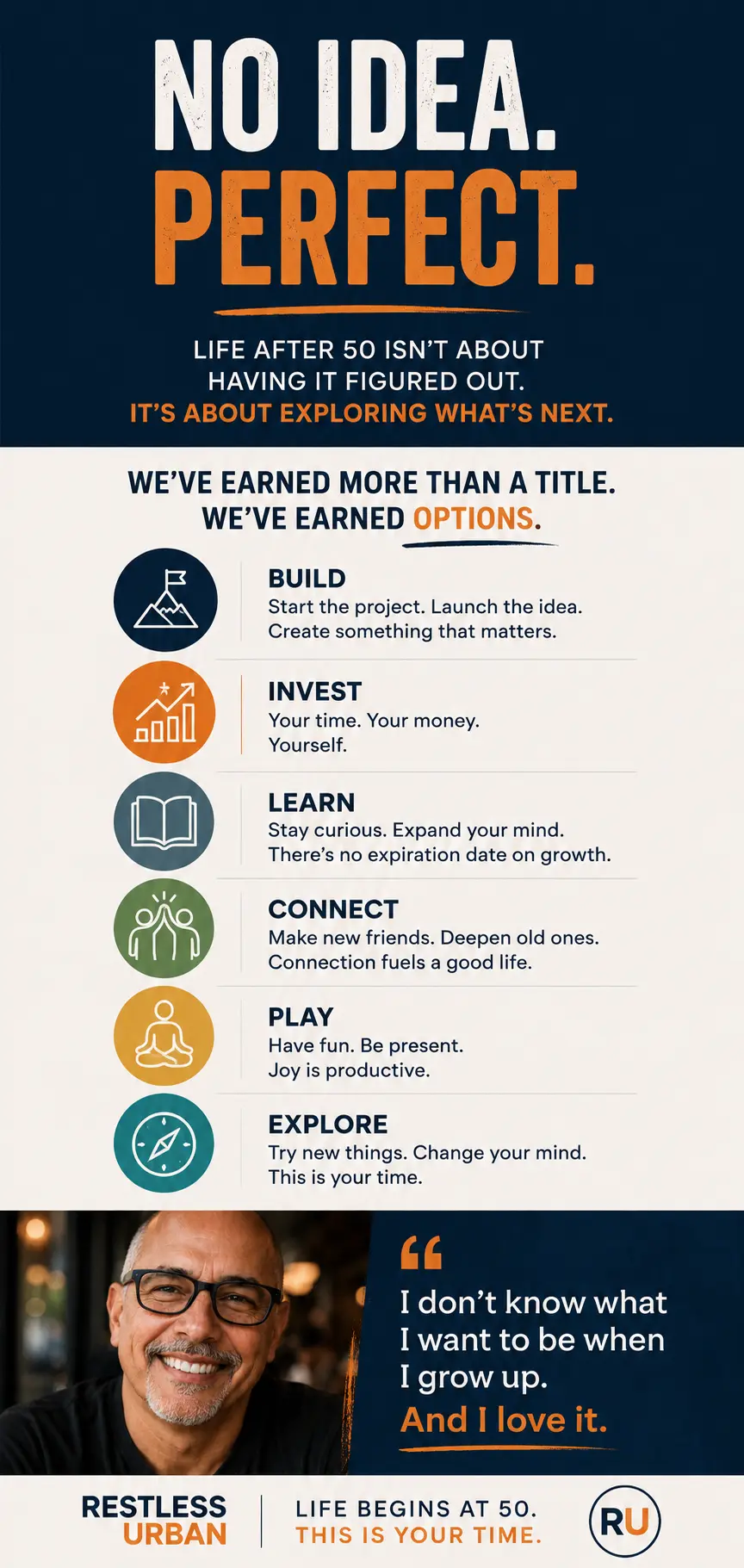


More Features about Work

Music changed my life. Playing guitar helped me heal, grow stronger, and embrace change.
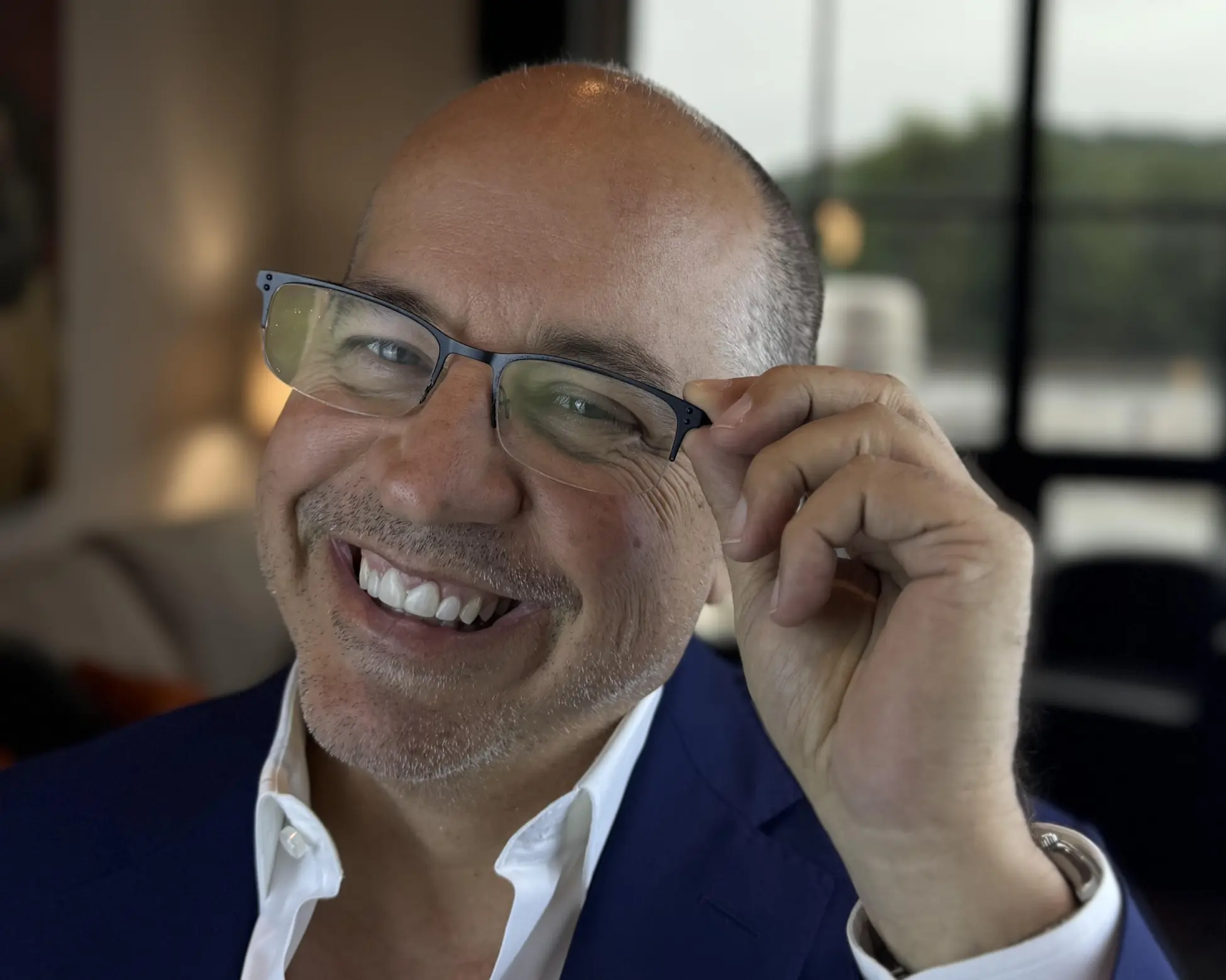
Founder Andrew Bowins shares the story behind the creation of RestlessUrban.
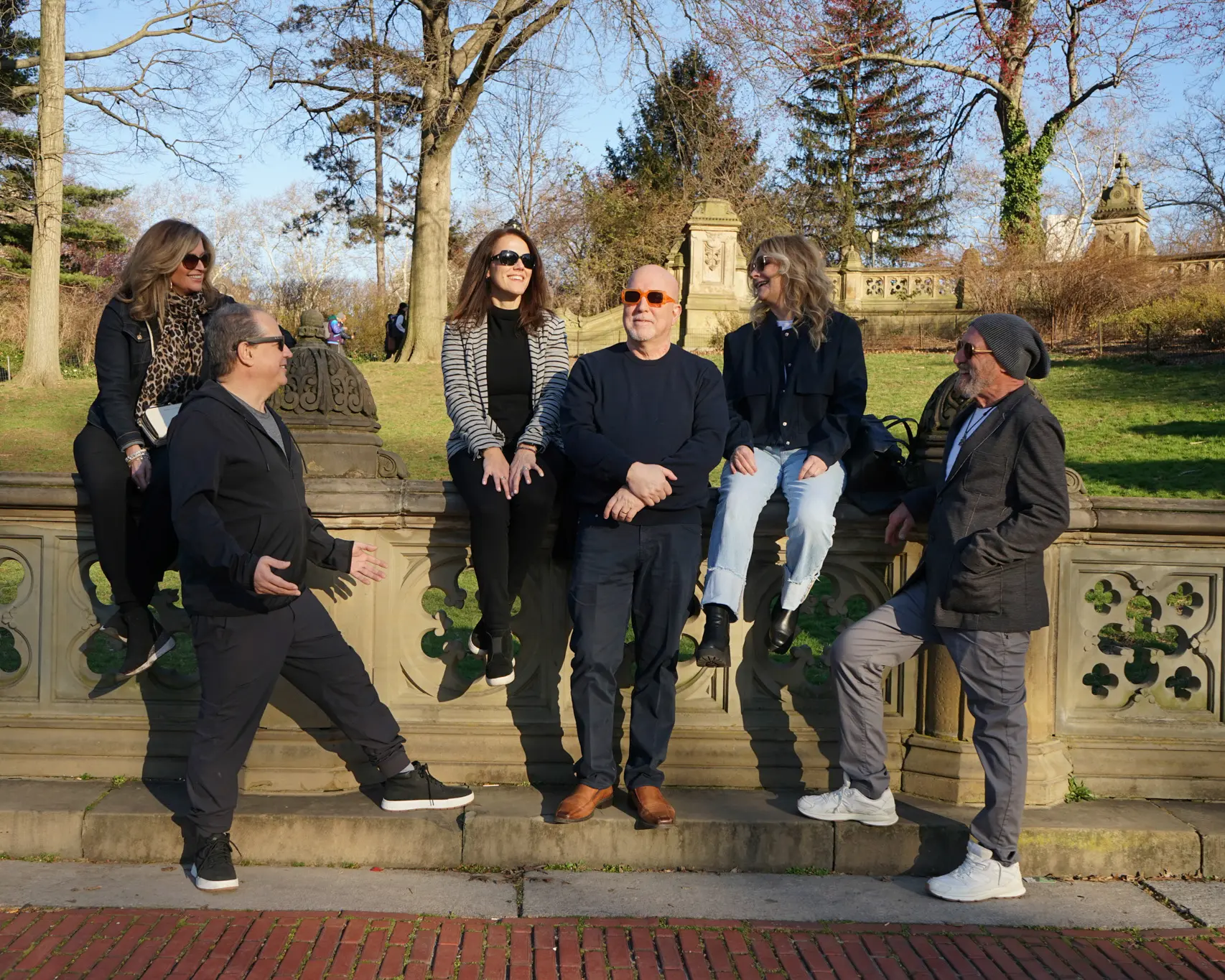
Job search after 50: Phyl Terry's Never Search Alone and the support of collaborative Job Search Councils.

Companies that actively invest in retaining and hiring professionals over 50 enjoy clear advantages.

Inspiring second acts from people over 50 who found passion and purpose through flying, teaching, and music.

Music and brain health: How a former chancellor found joy, stress relief, and purpose through daily 90s rock jams.

Career change after 50: rethinking work-life balance, encore careers and what meaningful work looks like.

Artist Gary Holme reinvents himself at 70, proving it’s never too late to reclaim passion and create anew.