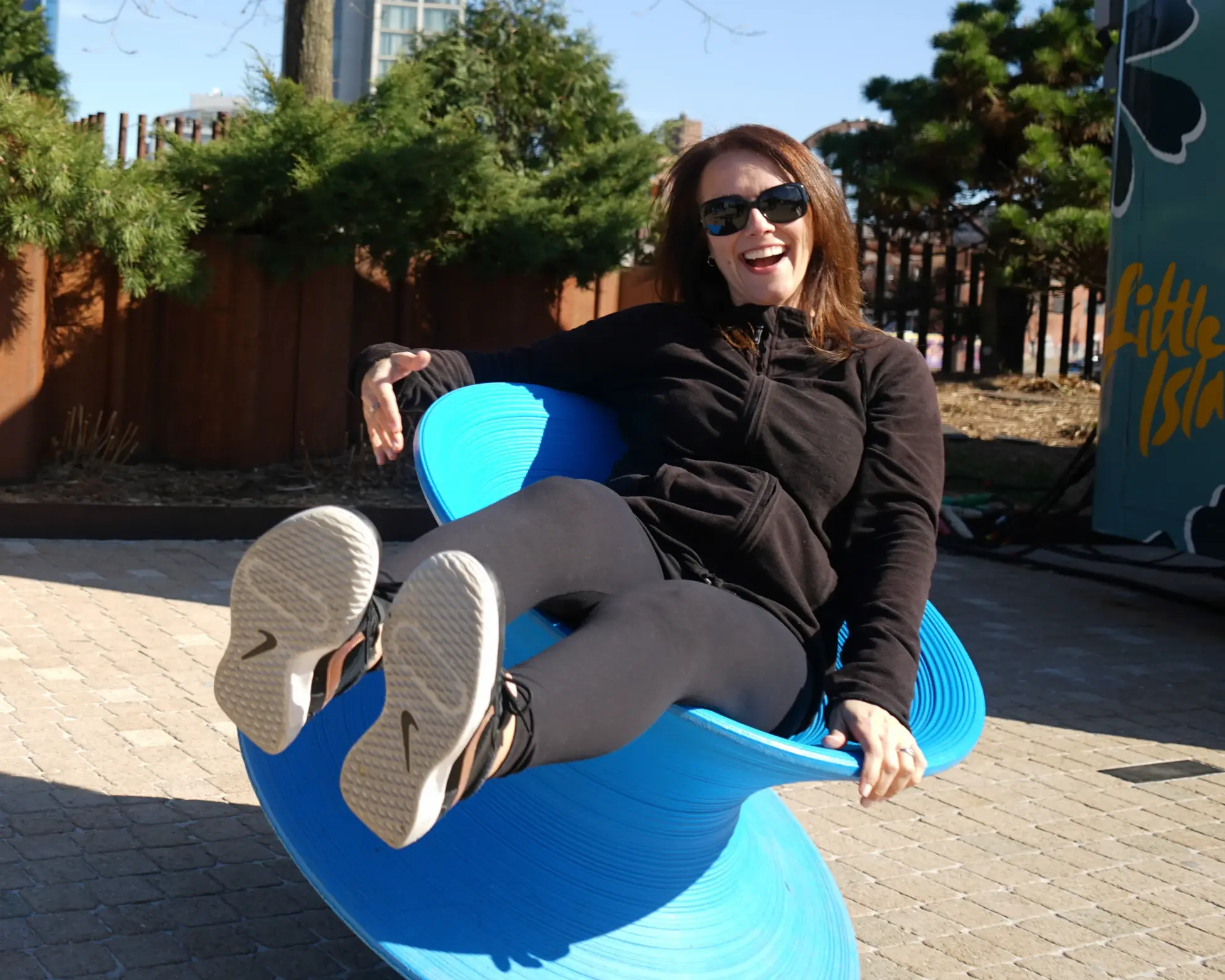
There is a peculiar thing that happens to fun as we get older: we begin demanding that it justify itself.
We walk for cardiovascular health. Travel to broaden our perspective. Learn something new to keep the brain sharp. Play pickleball for exercise and connection. Even meditation, the practice of ostensibly doing nothing, comes with measurable benefits. Apparently, adults cannot simply enjoy themselves. Even fun, it seems, needs to show a return.
I understand how we got here. By 50, most of us have spent decades being responsible for something or someone. Careers, mortgages, children, aging parents, finances and health have trained us to think in outcomes. I’ve certainly spent enough of my life thinking that way. But lately I’ve wondered whether all that responsibility can crowd out something important: doing things simply because they look like fun.
Why Play After 50 Can Feel Different
There is something else we accumulate by 50: certainty about ourselves. I don’t dance. Camping isn’t my thing. I’m not artistic. I’d look ridiculous doing that. We call this self-knowledge, and often it is. But sometimes I wonder if it’s simply old information.
That’s what makes playfulness after 50 interesting. It temporarily suspends the person we’ve become exceptionally good at being. The executive can’t stay upright on a paddleboard. The accountant is terrible at pottery. The parent who has spent decades having answers suddenly doesn’t know the rules. For a little while, competence isn’t required.
Philosopher C. Thi Nguyen recently explored a related idea in the Financial Times: some experiences can be valuable not because of what they accomplish, but because the experience itself is worthwhile. Think about fly-fishing. If your objective is acquiring dinner, standing in a river trying to persuade a fish to bite an artificial insect isn’t terribly efficient. But efficiency isn’t why people stand in rivers. Perhaps one of the freedoms available after 50 is allowing a few things to have no measurable return.
What Research Says About Play and Wellbeing
Here is where the argument gets slightly ridiculous. I’m suggesting play doesn’t need to accomplish anything, and now I’m going to tell you what researchers say it accomplishes.
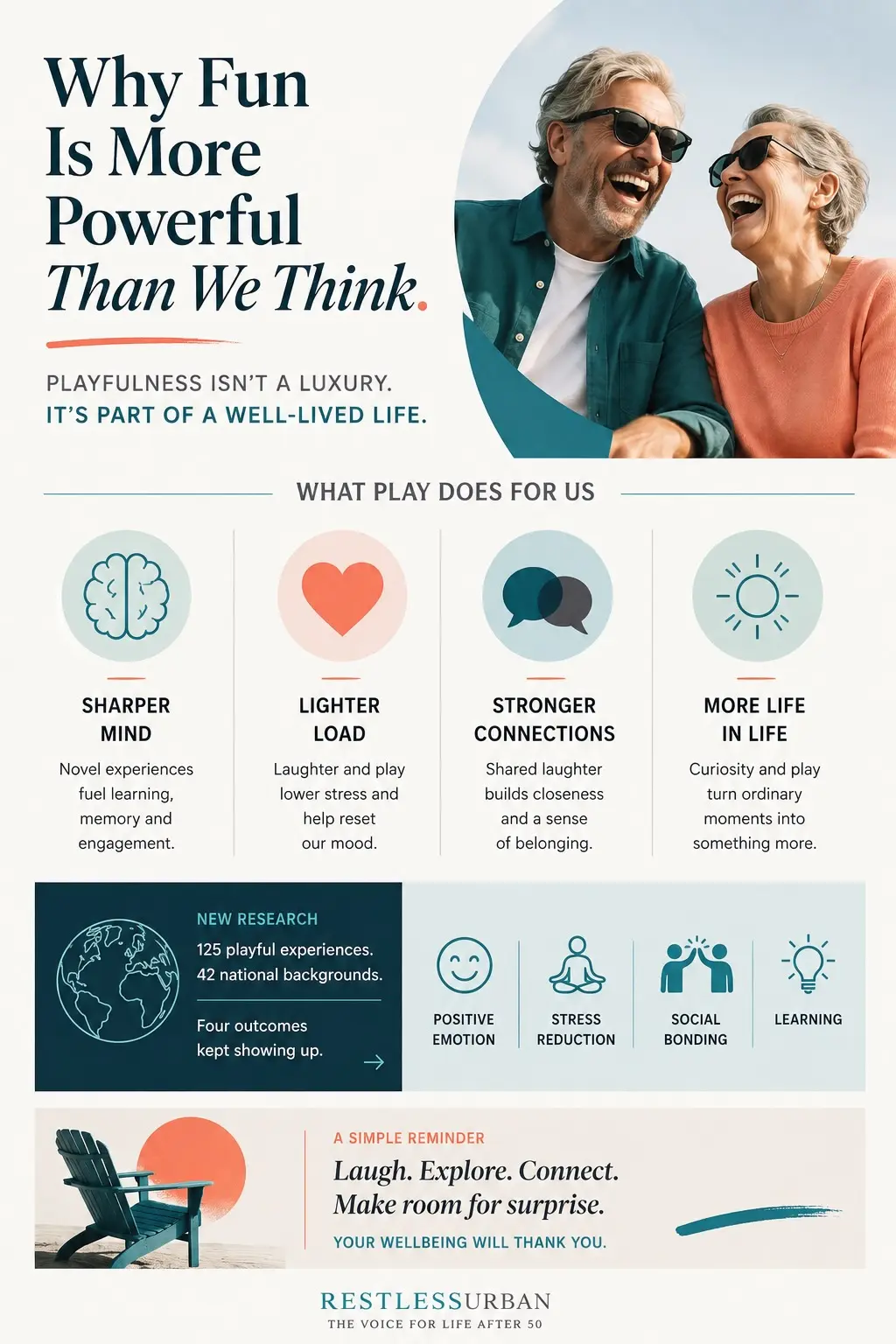
A July 2026 study of highly playful experiences analyzed 125 experiences reported by people representing 42 national backgrounds. Positive emotion, stress reduction, social bonding and subjective learning repeatedly emerged. The study wasn’t about people over 50, so it doesn’t tell us something definitive about aging. But the consistency is interesting.
Research involving older adults points in a related direction. A 2025 meta-analysis of leisure activities in older adults examined 23 randomized controlled trials involving 1,293 people. Activities included mahjong, poker, virtual reality and other games, with researchers reporting improvements in measures of cognition, memory, executive function and quality of life.
Then there’s a much larger study particularly relevant to life after 50. Researchers followed 19,821 adults age 50 and older across 15 European countries and found associations between mind-stimulating leisure activities, including word and number games, cards and reading, and measures of health and wellbeing. Because the research was observational, it doesn’t establish cause and effect.
There is something slightly absurd about using scientific evidence to defend activities whose appeal may lie precisely in not needing a defense. Maybe it’s enough that play feels good.

Adult Summer Camp: Play Without an Agenda
Then I discovered something that feels like the perfect test of this idea: summer camp for adults.
Club Getaway’s adult camp in Connecticut offers weekends filled with activities such as kayaking, archery, ziplining, ropes courses, dance parties and campfires. The idea isn’t interesting to me because I want to pretend I’m 15 again. It’s the prospect of going somewhere where the normal rules of adulthood temporarily loosen. Try something because you’ve never done it. Meet someone without networking. Stay up late because the conversation is good.
Adult camp isn’t really about becoming a kid again. It’s about remembering that adults are still allowed to play.
Rediscovering Curiosity After 50
Another wonderfully unnecessary pursuit is geocaching. As of 2026, there are more than 3.45 million active geocaches around the world, meaning people are using GPS coordinates to hunt for cleverly hidden objects in parks, neighborhoods and far more unlikely places.
Nothing about the park changes when you start geocaching. What changes is the way you look at it. Maybe playfulness works the same way. We can be the person who can’t keep the kayak straight, makes something in pottery class that was supposed to be a bowl, or laughs until the original joke no longer makes sense. After decades of becoming competent adults, there is something liberating about occasionally not knowing what we’re doing.
Making Room for Play After 50
Life after 50 is serious enough. Retirement becomes real. Health becomes more present. Parents may need care while adult children still need help. Careers and finances can become uncertain. The problem isn’t that we take these things seriously. It’s when seriousness becomes our default setting.
Maybe play doesn’t cancel responsibility. It simply makes our lives larger than our responsibilities. We spend decades becoming capable, dependable and increasingly certain about who we are. There is value in all of that. But there may also be value in occasionally surprising ourselves.
We often talk about life after 50 using enormous verbs: reinvent, transform, optimize, thrive. I’m becoming more interested in a smaller one: explore. Go somewhere unfamiliar. Be bad at something new. Laugh at yourself. Follow an interest without needing to know where it leads.
Because maybe the opportunity after 50 isn’t to become a new person at all. Maybe it’s to discover that the person we already are still has some surprises left.
And when something catches your attention, makes you curious or sounds just a little ridiculous, perhaps we don’t always need to ask what we’ll get from it.
Sometimes, “That looks like fun” is reason enough.


More Features about Play

Discover the story behind the song “Two Nights in Memphis”.

A RestlessUrban fashion guide fueled expert reviews, fantastic finds, and curious explorations.

Meet Bryan Jones. There is no trophy for ‘safe and sensible’.

Middle age invites a shift from chasing success to finding passion and purpose.

Creative pursuits and play after 50: make room for hobbies, joy and connection in everyday life.

Glamping grows up with luxury retreats where peace, comfort, and dinner waiting are the new essentials.

Technology is becoming a lifeline for Gen X caregivers juggling kids, parents, and peace of mind.