Published
At a glance
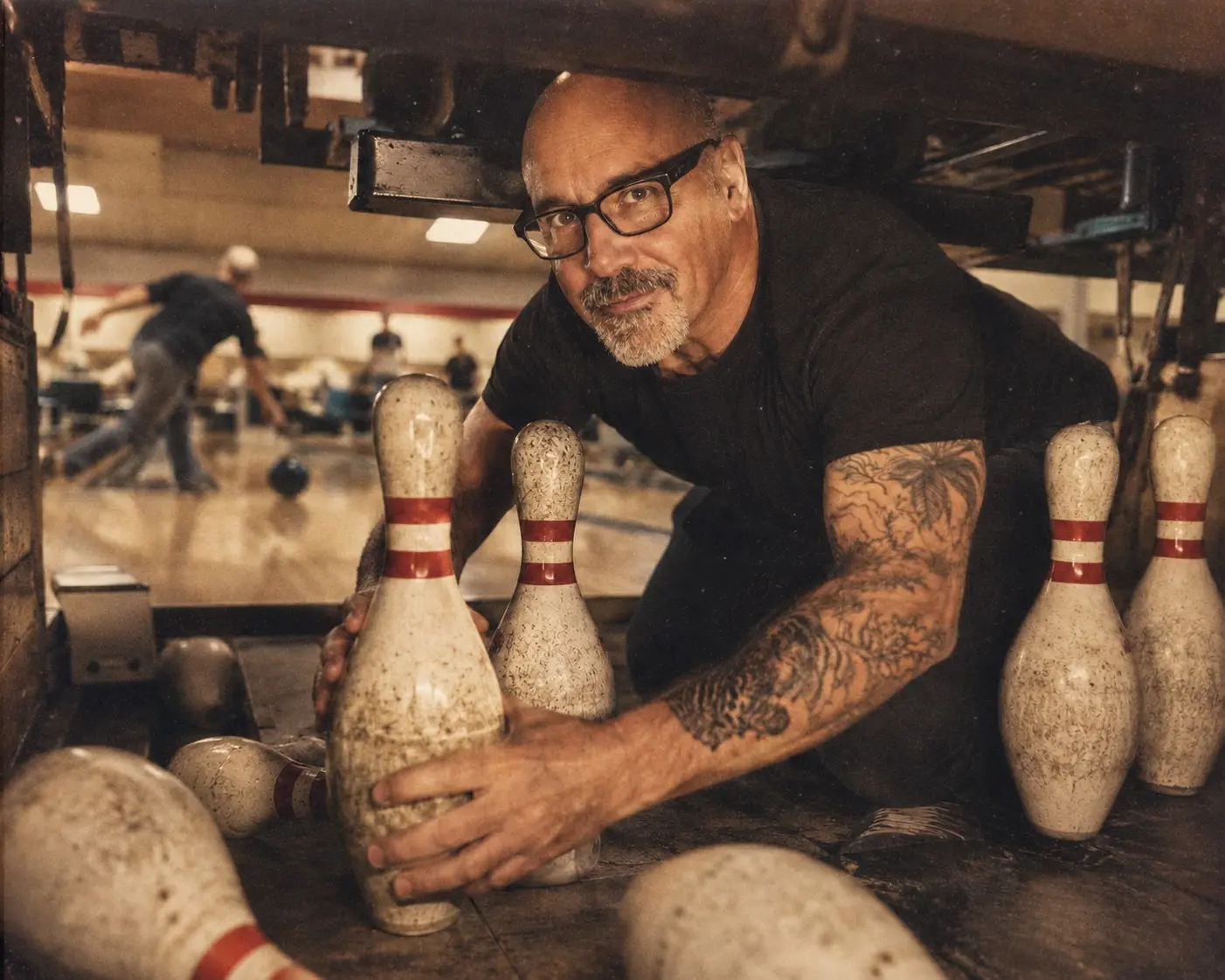
- Experience and resilience after 50 are explored through the author’s early jobs, including manually setting pins at a bowling alley in Lindsay, Ontario.
- Memories of unfamiliar tasks and unexpected situations provide a different perspective on the adaptability employers now often describe as a new requirement.
- The essay asks readers to recognize learning that never reached a résumé, while remaining open to problems that decades of experience have not already solved.
I’ve been thinking about resilience lately. We use the word so often that I’m not sure it means much anymore. Companies want resilient employees. Consultants build resilience programs. Leadership conferences put it on slides. And now, as artificial intelligence rearranges another corner of working life, we’re once again being told that the people who thrive will be the ones capable of adapting.
Fair enough. But I wonder if some of us started learning how to adapt long before anybody gave it a name. One of my first jobs was at a bowling alley in Lindsay, Ontario, the small Canadian town where I grew up. I wasn’t working the counter or handing out shoes. I set the pins. By hand.
There was no machine sweeping the lane and magically resetting everything. There was me behind those pins, listening for the crash, jumping in to put them back in place and getting the hell out of the way before somebody sent another bowling ball down the lane. It sounds a little insane today. At the time, it was just a job.
The Jobs We Left Off The Resume
That’s probably what I remember most about those early jobs. Nobody talked to us about career paths, transferable skills or personal brands. You showed up, someone explained what needed to be done, probably once, and you tried not to screw it up too badly. In my case, one of my first professional competencies was apparently knowing when to move quickly.
There’s evidence those early encounters with work can follow us much further into adulthood than we realize. A 2026 longitudinal study published in Research in Social Stratification and Mobility followed participants in the Youth Development Study from adolescence into their mid-40s. Researchers found that longer-duration teenage employment was associated with establishing careers sooner and higher wages through midlife. But they found a complication too: intensive work of more than 20 hours a week was associated with a lower likelihood of earning a bachelor’s degree.
So this isn’t an argument for sending every teenager out to find a miserable summer job. The research is more nuanced than that. Still, it raises an interesting possibility: Maybe our first jobs weren’t just teaching us how to do a job. Maybe they were teaching us how to work.
Mustard, Meet Lapel
Years after the bowling alley, I had just finished graduate school and landed an interview with a prestigious firm. I was young, ambitious and fairly convinced I was ready for the big leagues. Naturally, I was running late.
I skipped breakfast, grabbed a street hot dog with mustard and ate it while racing to the interview. I bolted into the office, did the interview, shook hands and walked out feeling pretty damn good about myself. Then the elevator doors started closing and I caught my reflection: mustard on my lapel, tie and white shirt.
Nobody had said a word. Somehow, I got the job. More than 30 years later, I still laugh about it, but the bowling alley and the mustard-covered interview seem strangely connected now. Both taught me something nobody teaches particularly well: how to keep functioning when the script changes. Funny how much of adulthood turns out to be exactly that.
What experience teaches us about resilience
We tend to describe experience as accumulated knowledge. Someone has spent 30 years doing something, so presumably that person knows more than someone who has spent five. Maybe. But I’m beginning to think that’s the least interesting thing experience gives us. The greater advantage of experience may be having been surprised enough times to know that surprise is survivable.
By 50, you’ve probably watched good plans fail and questionable ones inexplicably succeed. You’ve trusted the wrong person, doubted the right one and walked into rooms feeling completely prepared only to discover you weren’t. And if you’ve spent decades working, you’ve repeatedly had to become a beginner again.
That’s the part of the Gen X story I find more interesting than nostalgia for rotary phones and mixtapes. We didn’t simply watch technology change. We repeatedly watched things we had learned how to do become obsolete. Then we learned something else. Now we’re doing it again.
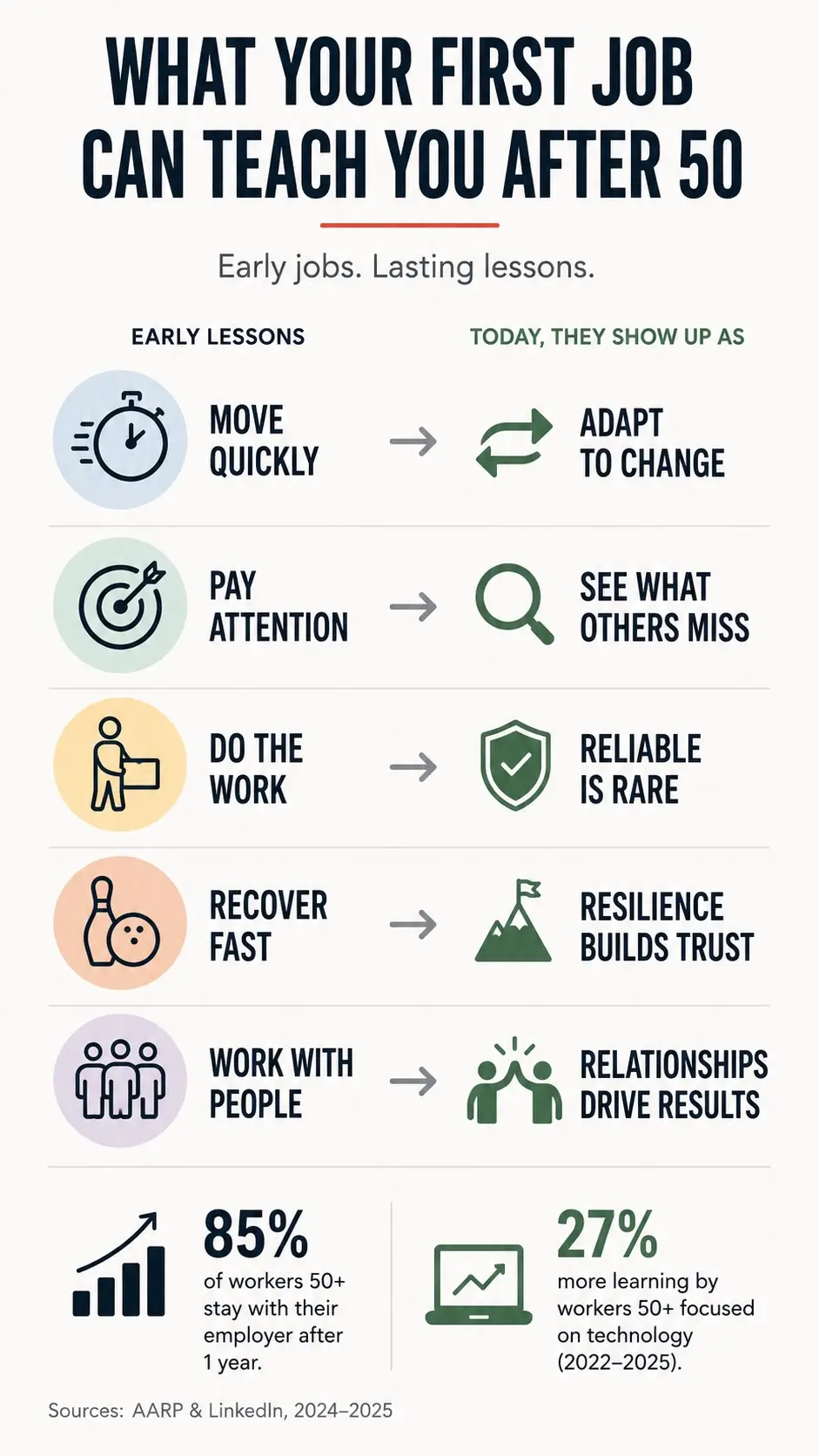
Recent AARP and LinkedIn research on older workers and technology skills offers an interesting counterpoint to the stereotype that experienced workers resist technological change. Among workers 50 and older, the share of LinkedIn Learning sessions devoted to technology increased from 19.5% in 2022 to 26.6% in 2025. The overall participation gap in LinkedIn Learning between younger and older workers also narrowed from 13.5% to just 1.6%.
That doesn’t mean everyone over 50 is charging fearlessly into AI. We aren’t. It means the more interesting story may not be whether older workers can adapt, but how many times we’ve already had to.
Experience Hiding In Plain Sight
Another finding deserves attention. According to the AARP and LinkedIn analysis of the multigenerational workforce, among people hired in June 2024, 85.4% of workers 50-plus were still with their employer a year later, compared with 70.6% of younger hires.
That statistic doesn’t prove older workers are better workers. Retention can reflect many things, including differences in mobility and opportunity. But it does challenge the idea that longevity in the workforce is merely baggage. Perhaps we’re measuring experience too narrowly.
Judgment doesn’t fit neatly into a résumé. Neither does composure. It’s difficult to quantify knowing when a crisis really is a crisis, when somebody deserves another chance, when a plan needs another hour and when it’s time to abandon the damn thing. Those abilities often arrive disguised as years.
Which brings me back to the bowling alley. I don’t want to romanticize teenage work. Some first jobs were wonderful. Some were miserable. Some people worked because their families needed the money. But I wonder how many of us are carrying an education we rarely count.
Maybe yours came from a paper route, restaurant, grocery store, farm, factory, construction crew or gas station. Maybe it came from being bored, overwhelmed, embarrassed or responsible for something that seemed completely insignificant at the time. The strange thing about experience is that you often don’t know which experiences mattered until decades later.
At 16, setting bowling pins was a way to make a few dollars. At 59, I see something else. It taught me to pay attention, do something repetitive without expecting applause, recover quickly when things went wrong and understand that another ball was coming whether I was ready or not.
That’s not a bad description of adulthood. Perhaps that’s the real advantage of experience after 50. It isn’t believing we’ve seen everything before. We haven’t. AI alone should cure us of that illusion. It’s having encountered enough things we never saw coming to trust that we can probably figure out the next one too.
Sometimes the plan works. Sometimes it doesn’t. Sometimes you get the job with mustard all over your shirt. And sometimes another bowling ball comes rolling down the lane.
You may not know exactly what’s coming, but after a few decades, you get pretty good at paying attention.
And knowing when to move.
Read next




More Features about Culture

A personal travel reflection: how sailing the English Channel and a gift in Paris shaped life after 50.

At 50, life is just getting started. Meet the generation redefining aging with bold moves and big adventures.
Exclusive preview of title track and feature video free for a limited time.

Bold stories of reinvention. Singer-songwriter Dean Brandsma

Meet Marleah. Unfiltered, raw and curious explorations of life.

Leaving home at 53 was not a crisis. It was my chance to reinvent life after the empty nest and rediscover freedom.

Singer-songwriter Dean Brandsma rewrites his life’s soundtrack. Hear the story behind the song Crossroads.
Style after 50 is not about rules. It’s about confidence, emotion, and embracing who you are right now.