Published
At a glance
- Travel lessons after 50 lead Andrew Bowins back to an early journey from small-town Ontario to Europe and a memorable experience in Paris.
- The essay explores how curiosity, slowing down and allowing plans to change can make room for unexpected human connection.
- Those lessons continue to inform the way he approaches unfamiliar places and changes in life, treating presence as part of the journey itself.
I am from Lindsay, Ontario, a small town with a big heart tucked into the Kawartha Lakes region. Growing up there meant being surrounded by people who knew you, where you came from, and where you were headed. It was a good place to belong and an easy place to stay. But while I loved the sense of community, part of me always wondered what it would feel like to see more of the world.
That curiosity stayed quiet for a while. Like many others, my early exposure to travel was limited to road trips. These were day drives that always ended before dark, packed with sandwiches, siblings and the backseat soundtrack of summer. It was not until my mid-20s, long after university, that I finally made a plan to go farther.
A journey begins
A few new friends and I began organizing a trip. What started as a casual idea quickly became something more deliberate. We booked flights to London, mapped our route and set our sights on adventure. The anticipation alone gave me a kind of energy I had not felt before.

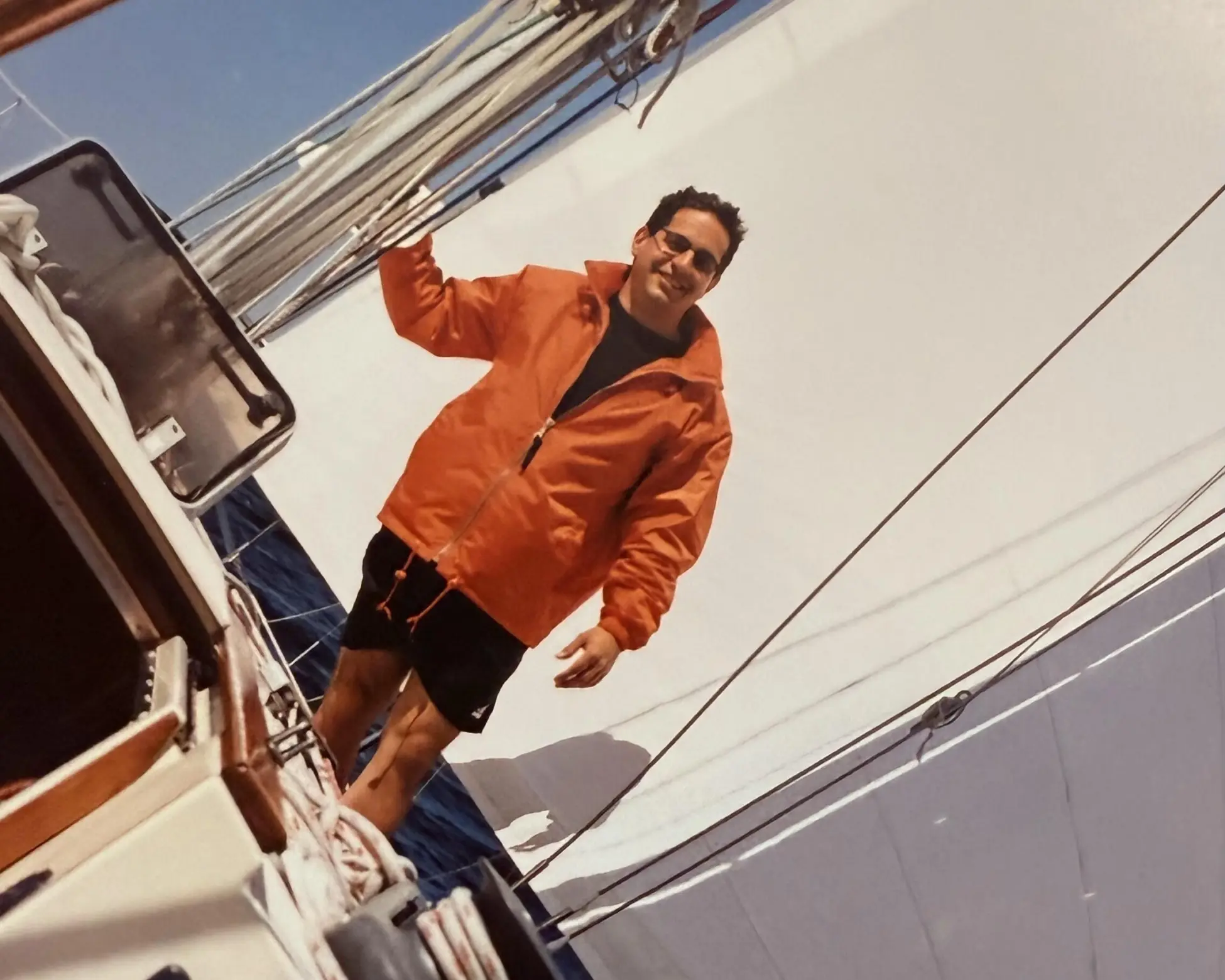
We spent our first night in London enjoying champagne with our captain before heading to Portsmouth to begin our adventure.
We arrived in London and spent two days exploring the city. We visited museums, wandered neighborhoods and adjusted to the pace of a place that felt both historic and alive. After that, we took a train to Portsmouth, where a 54-foot CNC sailboat waited for us at the marina. The Isle of Wight floated in the backdrop like a promise. What we thought would be a leisurely voyage turned into something much more hands-on. The captain asked us to sail the boat manually across the English Channel at night. There was no autopilot, or so we thought.
It turns out the autopilot was working just fine. The captain simply wanted us to experience what it felt like to do it ourselves. And we did. We navigated by starlight and learned to move with the rhythm of the sea. It was exhausting and exhilarating, and it bonded us in a way only a shared challenge can.
When we docked in Cherbourg, France, I said goodbye to the group and boarded a train to Paris alone. That solo stretch was the start of something else. It was a more personal journey that changed the way I think about travel.

My first glimpse of the Eiffel Tower as I walked the streets of Paris.
Paris and the power of presence
I checked into a modest boutique hotel on a quiet side street, with a clear view of the Arc de Triomphe in the distance. The woman who ran the place did not speak much English, but her presence was comforting. One morning, she noticed me overplanning with my guidebook. She gently closed it and said, “No plan. Just feel.”
She showed me how to wander slowly, how to notice the smell of bread in the morning air and how to sit still in a park without needing a destination. Before I left, she gave me a small, hand-carved wooden tea box. “For your memories,” she said, gesturing that I should collect little objects, write notes for each and share them with loved ones when I got home. That box became a sacred part of the journey and it still sits on my shelf.
That early trip lit a fire that has never gone out. And now, as someone well past 50, I see the connection between travel and wellness more clearly than ever.
What travel gave me
I am cautious about turning a meaningful journey into a medical claim. Travel is not a guaranteed route to better heart health, memory or a longer life, and not everyone has the money, mobility or time for it. What I can describe is its place in my own life: a break in routine, attention to unfamiliar surroundings and opportunities for connection.
Those possibilities do not require a flight. A day in a nearby town or a new walking route can also be a way of practicing curiosity. Living like a local in France offers another writer’s account of finding that slower rhythm.

Thirty years ago, I learned the lesson to grab the wheel of life and make travel part of my wellness journey.
Why it matters more after 50
After 50, many of us are reimagining our lives. The questions change. Instead of asking “What now?” we begin to ask “Where to next?” Travel offers a reset. It breaks routine. It provides fresh perspective. And it allows us to reconnect not just with new places, but with parts of ourselves we may have put on hold.
Whether it is a weekend road trip or a journey across the globe, each experience has the power to shift how we feel, think and age. For me, that first trip taught me that the world is both bigger and more intimate than I realized. That lesson keeps unfolding every time I pack a bag.
Wellness is not a destination. But travel helps us move closer to it. One experience, one memory and one shared story at a time. Looking back, I realize how much I had to learn. That first trip, especially the time I spent in Paris, taught me that slowing down, staying curious and embracing uncertainty are not just ways to travel. They are ways to live. Today, those same lessons continue to guide me. Whether I am navigating a new city or facing a change in life, I try to remember what that kind woman at the hotel showed me. Let go of the plan, trust the moment and make space for something meaningful to unfold.
Read next

More Features about Culture

At 50, life is just getting started. Meet the generation redefining aging with bold moves and big adventures.
Exclusive preview of title track and feature video free for a limited time.
Bold stories of reinvention. Singer-songwriter Dean Brandsma
Meet Marleah. Unfiltered, raw and curious explorations of life.

Leaving home at 53 was not a crisis. It was my chance to reinvent life after the empty nest and rediscover freedom.
Singer-songwriter Dean Brandsma rewrites his life’s soundtrack. Hear the story behind the song “Crossroads.”
Style after 50 is not about rules. It’s about confidence, emotion and embracing who you are right now.

Explore the fall/winter 2025 style guide for women over 50 and embrace confident, curious everyday fashion.