
Age discrimination remains a persistent part of working life for Americans over 50 despite growing attention to the experience and institutional knowledge older workers bring to the workplace.
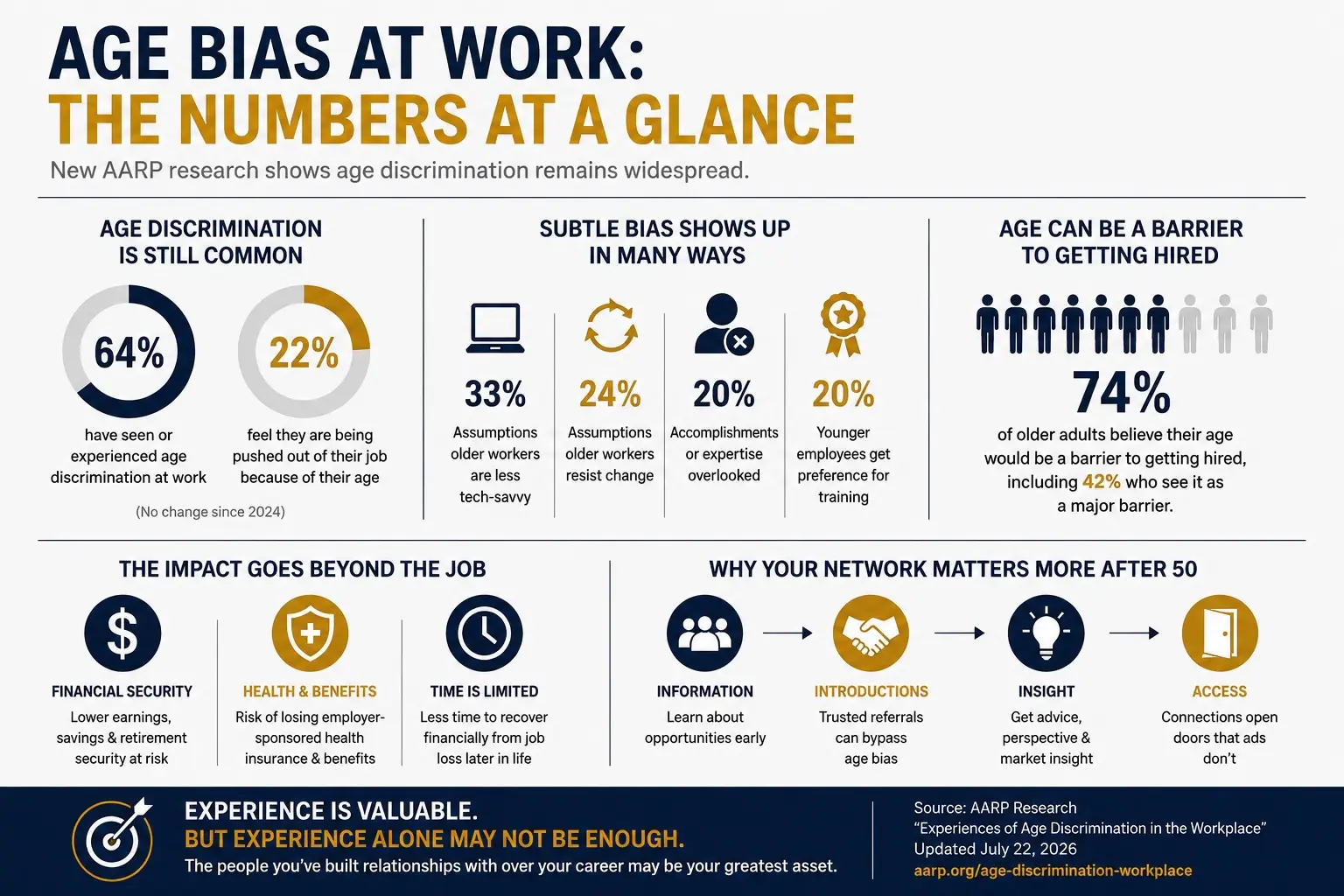
Updated AARP research on age discrimination in the workplace found that 64% of workers age 50 and older reported seeing or experiencing age discrimination in the workplace, a proportion that has not changed since 2024. Another 22% said they felt they were being pushed out of their jobs because of their age.
The findings add another dimension to the challenges facing experienced workers who want or need to remain employed, change jobs or pursue a new professional chapter.
Bias Isn’t Always Obvious
Age discrimination does not necessarily arrive as an explicit statement that someone is “too old.” AARP found that 60% of workers 50-plus reported experiencing subtle forms of age discrimination in both 2024 and 2025.
Among the examples, 33% reported assumptions that older employees are less tech-savvy, 24% cited assumptions that they are resistant to change, 20% reported having their accomplishments or expertise overlooked and 20% reported younger employees receiving preference for training opportunities.
Among workers who had seen or experienced age discrimination, 91% said discrimination against older workers is common, including 36% who described it as very common.
The concern can follow workers directly into a job search. Separate AARP research on older job seekers and age discrimination found that 74% of older adults believed their age would be a barrier to getting hired, including 42% who considered it a major barrier.
Experience Meets a Difficult Reality
The findings expose a stubborn contradiction in the labor market. Employers need experienced workers, leadership skills and institutional knowledge, yet many workers over 50 believe the years that produced those qualities can also work against them.
AARP’s research notes that age discrimination can affect financial and retirement security as well as access to employer-provided benefits such as health insurance. For someone who loses a job at 52, 58 or 63, the stakes can be particularly high. There may be less time to recover lost earnings, rebuild retirement savings or absorb a lengthy period between jobs.

Why Your Network May Matter More After 50
The findings also help explain why professional relationships can become increasingly important later in a career. When conventional hiring channels are complicated by concerns about age bias, former colleagues, clients, recruiters and more distant professional acquaintances can provide information and introductions that may never emerge from submitting another online application.
That does not eliminate discrimination, and networking should not be presented as a cure for a structural workplace problem. But decades of accumulated relationships can provide experienced workers with another route to opportunities and information.
For workers over 50 considering what comes next, the latest numbers offer an uncomfortable but useful reminder: experience remains valuable, but experience alone may not always be enough. The people accumulated along the way may matter too.


More Trends

The Mind of a Dog blends science and comics. A must-read for first-time dog owners in their 50s and 60s.

Australian researchers say cold showers, ice baths, and plunges offer real health benefits.

Apple's Health Study explores wearable technology, sleep, exercise and connections across health.

Healthcare AI and trust: Philips research explores patient expectations, clinical oversight and care delays.

Sunday Scaries launches THC gummies marketed for sleep and restless nights.

Artificial intelligence in pet care: how veterinarians use AI to support diagnosis and detect illness.

Marriage and wellbeing: a study compares life satisfaction, health and family support in the U.S. and Japan.

As we age Duke researchers say it may be the number of medications not the drug type that raises risk.