
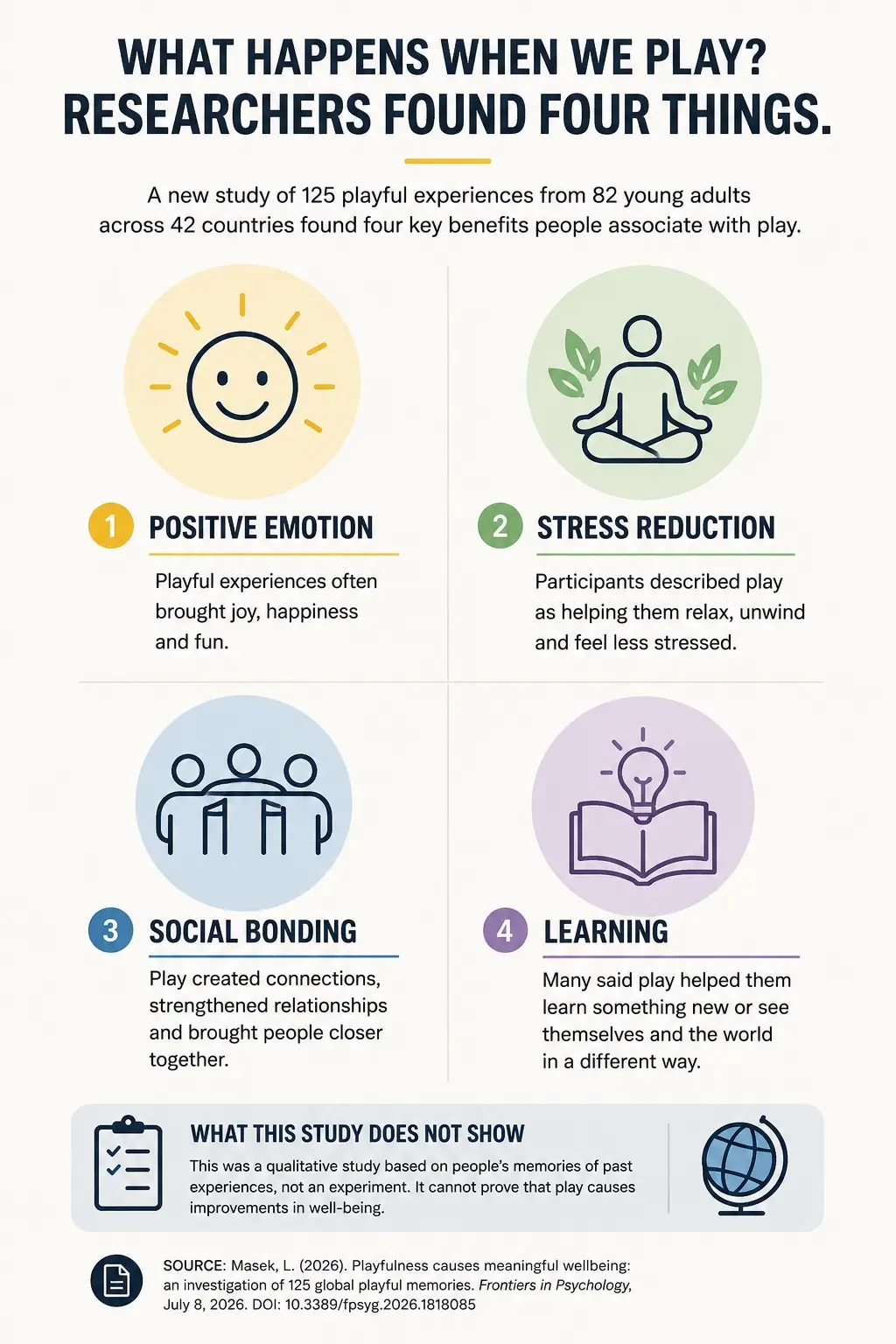
A new study examining playful experiences across cultures found that people repeatedly associated them with four aspects of well being: positive emotion, stress reduction, social bonding and learning.
The research, published July 8 in Frontiers in Psychology, analyzed 125 highly playful experiences recalled by 82 young adults representing 42 national backgrounds. Researcher Leland Masek of Tampere University in Finland used qualitative analysis to examine what participants believed those experiences meant in their lives.
The four themes appeared repeatedly in their accounts. Some participants described play as producing positive emotions or providing relief from stress. Others connected playful experiences with stronger relationships, learning or a different understanding of themselves and the world around them.
Play Was Not Just About Games
The experiences were not limited to traditional games. The study took a broad view of playfulness that included games, humor, parties, creative activities and playful social interactions.
Social connection was one of the recurring themes, with participants describing playful experiences as opportunities for bonding and strengthening relationships. Learning was another, including experiences participants said helped them understand themselves or the world differently.
The researchers also found differences in how participants described the impact of these experiences. Some recalled a temporary boost in well being. Others associated playfulness with particular people or environments, while some described repeated playful experiences as influencing their broader approach to life.
Taken together, the findings suggest that people can experience play as more than momentary entertainment. For participants in this study, its perceived value frequently involved emotion, stress relief, relationships or learning.

What The Study Does Not Tell Us
There are important limitations. This was a qualitative study based on people’s recollections of past experiences, not a controlled experiment designed to determine whether play causes improvements in well being.
The participants were also young adults. The findings therefore cannot be assumed to apply specifically to adults over 50. Instead, the study provides evidence about how a culturally diverse group perceived the role of playful experiences in their own lives.
The research raises questions for future studies, including whether intentionally creating playful experiences produces similar effects, whether repetition matters and whether the relationship could work in both directions, with greater wellbeing also making people more playful.


More Research

New research shows it is essential for fostering healthy aging and supporting longevity.

With the use of a mere five drops of blood, now possible for a person’s true biological age to be determined.

Research indicates travel enhances physical health, cognitive resilience, and social engagement.

A new global survey uncovers the many ways pet cats and dogs impact our daily wellbeing.

New study highlights how digital platform can uncover problems even before symptoms emerge.

Cats are outpacing the dogs when it comes to pet adoption, according to new statistics released by PetSmart.

New findings show many Americans face financial stress from inflation and rising cost of living.

Study shows engagement with the devices leads to better cognitive health outcomes.