
Older workers may be more motivated to help manage the emotions of people around them at work, according to new research examining age and interpersonal behavior in the workplace.
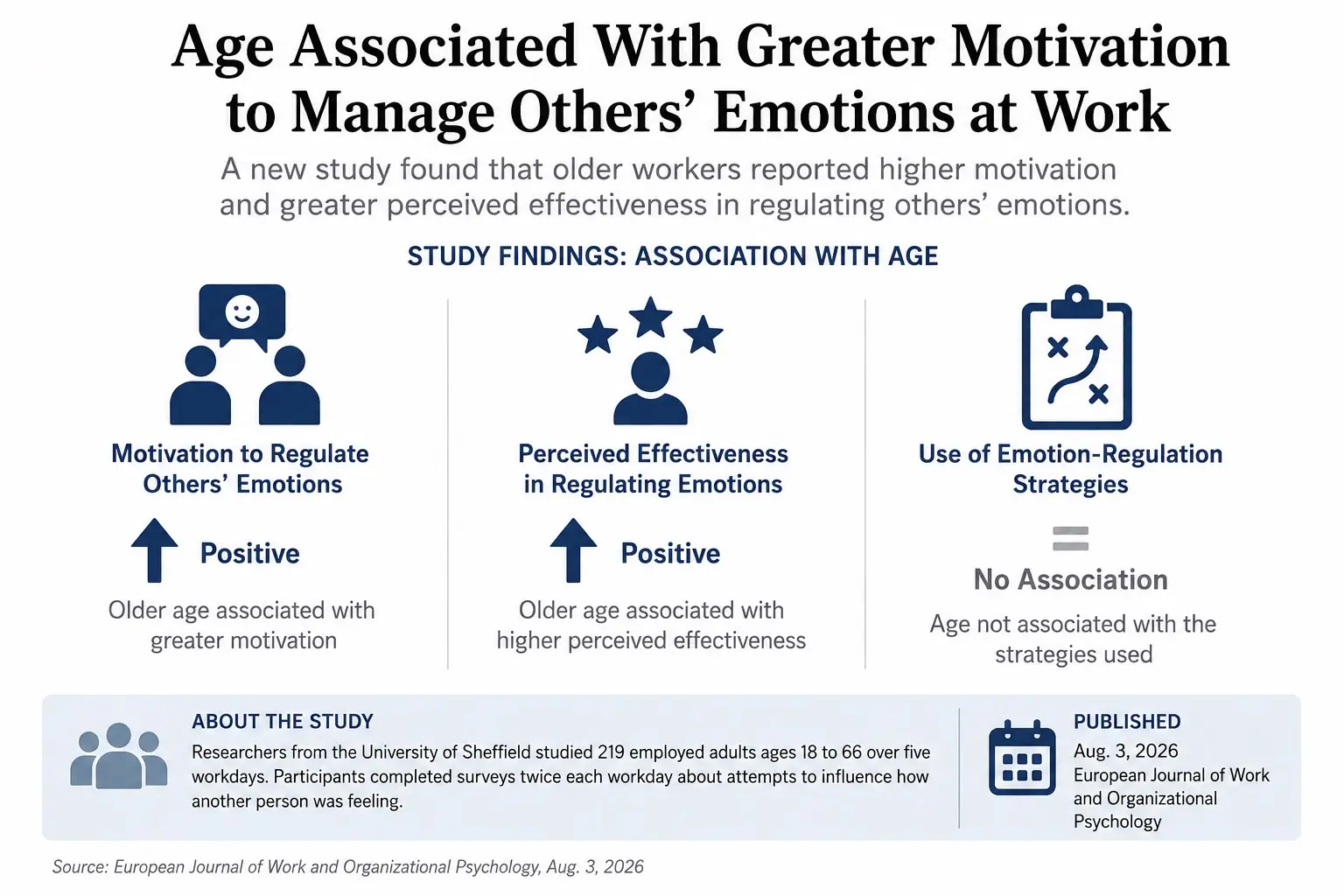
A study published Aug. 3 in the European Journal of Work and Organizational Psychology found that age was positively associated with greater motivation to regulate other people’s emotions and with participants’ perceptions of how effective they were at doing so.
Researchers from the University of Sheffield conducted a preregistered, five-day study involving 219 employed adults ages 18 to 66. Participants completed surveys twice each workday about workplace interactions in which they had attempted to influence how another person was feeling.
The researchers examined what psychologists call interpersonal emotion regulation, which refers to attempts to influence another person’s emotional state. The study looked at participants’ motivation to regulate another person’s emotions, the strategies they used and how effective they believed their efforts had been.
Age was positively associated with motivation to regulate others’ emotions and with participants’ perceptions of their effectiveness. Researchers did not find an association between age and the types of emotion-regulation strategies participants used.
The findings do not establish that older workers are objectively better at managing other people’s emotions. Effectiveness was based on participants’ own assessments, and the study examined age as a continuous variable rather than comparing workers over 50 with a defined group of younger employees. The research also does not establish that aging causes changes in interpersonal emotion regulation.
What the Broader Research Shows
A separate systematic review published Aug. 5 in BMC Psychology provides additional context.
Researchers reviewed 26 studies examining age, emotion-regulation strategies, emotional demands and workplace outcomes. They found no consistent overall pattern showing that older workers have either an advantage or disadvantage in workplace emotion regulation. Some studies reported more favorable findings among older workers, while others found no age differences or results favoring younger workers.
The review also identified substantial differences in how previous studies defined and measured age, emotion regulation and workplace outcomes, making broad conclusions difficult.
Together, the two studies present a mixed picture. The University of Sheffield research found an association between age and greater motivation to regulate other people’s emotions, as well as higher self-reported effectiveness. The broader systematic review found insufficient evidence to conclude that age consistently predicts better or worse emotion regulation at work.
The researchers behind both studies called for additional research into how age, workplace conditions and different forms of emotion regulation interact.



More Research

New research shows it is essential for fostering healthy aging and supporting longevity.

With the use of a mere five drops of blood, now possible for a person’s true biological age to be determined.

Research indicates travel enhances physical health, cognitive resilience, and social engagement.

A new global survey uncovers the many ways pet cats and dogs impact our daily wellbeing.

New study highlights how digital platform can uncover problems even before symptoms emerge.

Cats are outpacing the dogs when it comes to pet adoption, according to new statistics released by PetSmart.

New findings show many Americans face financial stress from inflation and rising cost of living.

Study shows engagement with the devices leads to better cognitive health outcomes.