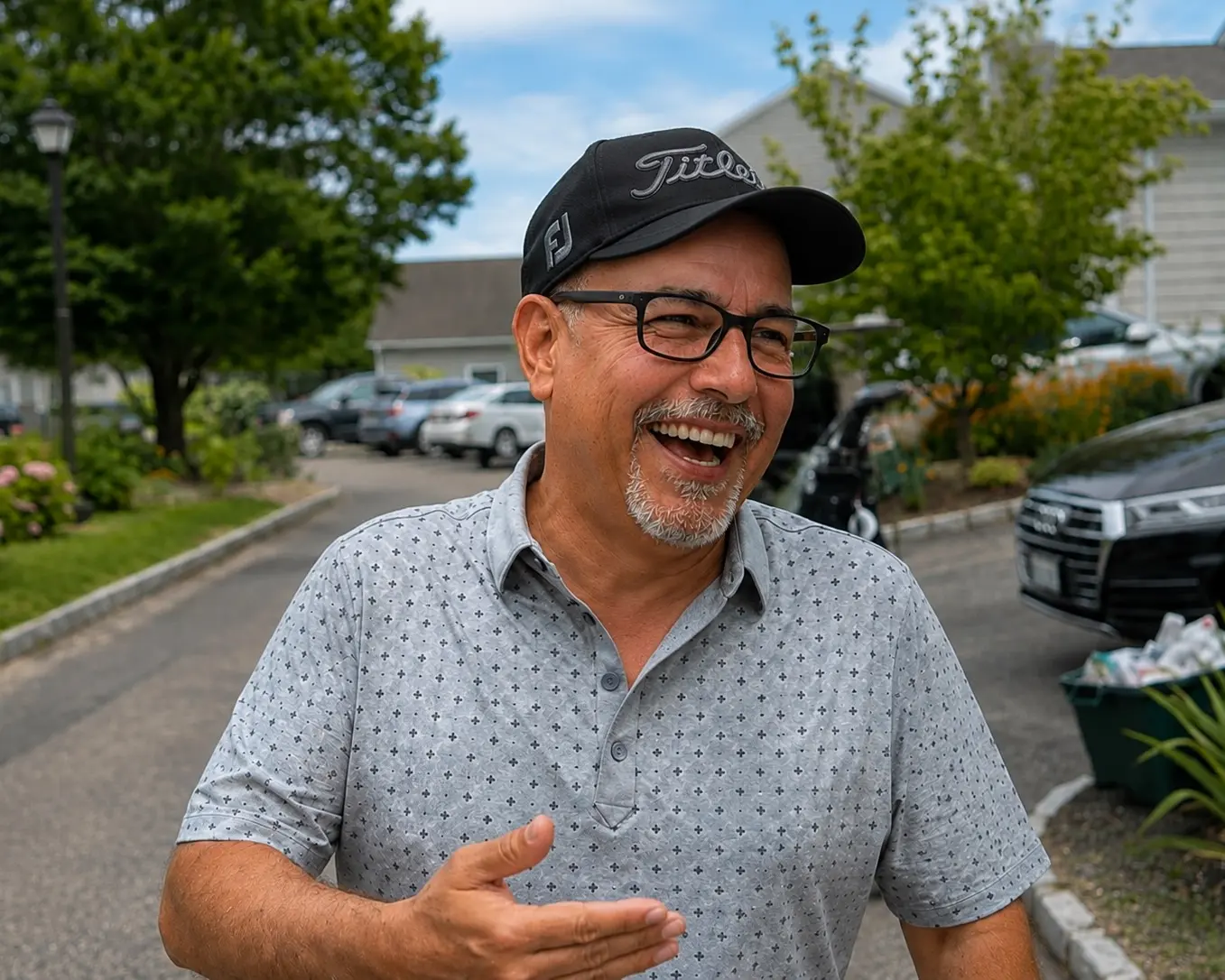
At some point, adulthood became remarkably serious. We work. We exercise. We watch what we eat. We count steps, monitor our sleep and occasionally spend an unreasonable amount of money on something promising to improve both. All sensible things. But somewhere along the way, many of us stopped doing something we once did without thinking about it: we stopped playing.
I’m approaching 60, and lately I’ve noticed something surprisingly simple: the more fun I’m having, the better I feel.I’m laughing more, trying new things and spending time with people who generate energy rather than consume it. My girlfriend deserves some credit. She’s unlocked a playfulness in me I didn’t realize had gone dormant, and apparently other people notice it too. Strangers say hello. People engage me. Women occasionally compliment me. I’ll admit my ego enjoys this for approximately three seconds.
Then my girlfriend gives me a look. She’s from the Balkans, and while I don’t speak every language from that part of the world, I’ve become remarkably proficient at translating this particular expression: “Keep it up and you’ll be too dead to enjoy this.” Message received. Fear, it turns out, can be an excellent counterweight to joy. But underneath the joke, something has genuinely changed. I feel more alive.

When Did Fun Become Work?
Children don’t need a reason to play. They don’t ask whether riding a bike counts toward their cardio goal or whether hide-and-seek improves executive function. Then we grow up and everything needs a purpose. Cycling becomes exercise. Walking becomes steps. Golf becomes networking. Hobbies become side hustles. Even fun apparently needs KPIs.
Which is why the research on adult playfulness caught my attention. A 2024 study of 210 adults ages 50 to 98 found their expressions of playfulness were comparable with those of younger adults. Playfulness was also associated with life satisfaction, flourishing and other measures of positive psychological functioning. The research doesn’t prove that play causes us to flourish, but it does challenge the assumption that playfulness naturally disappears as we get older. Maybe we don’t lose our capacity for play; maybe we just stop practicing it.
Play is Much More Than Pickleball
Play doesn’t require a pickleball paddle, although judging by America lately, many of you already have one. Researchers describe adult playfulness much more broadly. It can be lighthearted, intellectual, whimsical or social. Another study, this one involving 123 adults over 60, found playfulness was a significant predictor of self-reported well-being, with socially directed playfulness—enjoying other people and using playfulness to make situations lighter—showing the strongest contribution. That sounds less like medicine and more like a good Saturday night.
In real life, play can be almost anything. Learn guitar badly. Dance well. Take the road trip. Play cards until midnight. Make your partner laugh. Take a pottery class and produce the world’s ugliest bowl. Start a garage band at 62. Jump into the ocean. Go dancing on a Tuesday. Being good at any of it is entirely optional.
That may be part of the appeal. By 50, many of us have spent decades becoming competent. We know our jobs, routines and restaurants. We know exactly where the thermostat belongs and are prepared to defend that position. Competence is comfortable, but it can also make life predictable. Play gives us permission to become beginners again, to be a little ridiculous and to do something without caring whether we’re particularly good at it.

And Then There Are The People
Our social worlds change after 50. Children grow up. Careers shift. Friends move. Relationships change and routines harden. Play has a useful habit of disrupting those routines because it gives us a reason to get out of the house, enter unfamiliar situations and interact with people we might otherwise never meet. You go somewhere, try something, laugh and meet somebody. Occasionally, a stranger becomes a friend. Play creates proximity.
The research points in that direction too. Both studies found especially notable relationships between other-directed or socially directed playfulness and measures of well-being or positive psychological functioning. In other words, the interesting part may not simply be what we’re doing; some of it may be what happens between us while we’re doing it.
Think about the last time you laughed so hard you forgot what you were worried about, did something ridiculous with someone you love or went somewhere without knowing exactly what would happen. How did you feel? That’s the question I’m becoming more interested in as I approach 60.
Fun Belongs on the Wellness List
We spend enormous energy after 50 protecting ourselves against decline. Protect the heart. Protect the brain. Protect the retirement account. Protect the knees. All important. But I don’t want the next chapter of my life defined entirely by what I’m trying to preserve. I want things to look forward to: a trip, a concert, a ridiculous idea, a new friend, a first date, a 9:07 tee time, something I’ve never tried or something I’m terrible at. Especially something that makes me laugh so hard somebody takes a picture of me looking completely undignified.
That’s why we’re launching Recess at RestlessUrban, a new series of stories, research, videos and conversations exploring the power of play after 50. We’re not interested in pretending we’re younger. We’re interested in feeling more alive now. Or perhaps there’s an even better goal for this stage of life: become harder to bore.
So consider this your first assignment. Do something this week with absolutely no productive justification. Don’t monetize it, optimize it or track it. Just do it because it sounds like fun. You knew how to do that once, and maybe it’s time to find out what happens when you do it again.
If this resonates. Sign up for a free membership and see you at the playground.


More Features about Play

Discover the story behind the song “Two Nights in Memphis”.

A RestlessUrban fashion guide fueled expert reviews, fantastic finds, and curious explorations.

Meet Bryan Jones. There is no trophy for ‘safe and sensible’.

Middle age invites a shift from chasing success to finding passion and purpose.

Creative pursuits and play after 50: make room for hobbies, joy and connection in everyday life.

Glamping grows up with luxury retreats where peace, comfort, and dinner waiting are the new essentials.

Technology is becoming a lifeline for Gen X caregivers juggling kids, parents, and peace of mind.