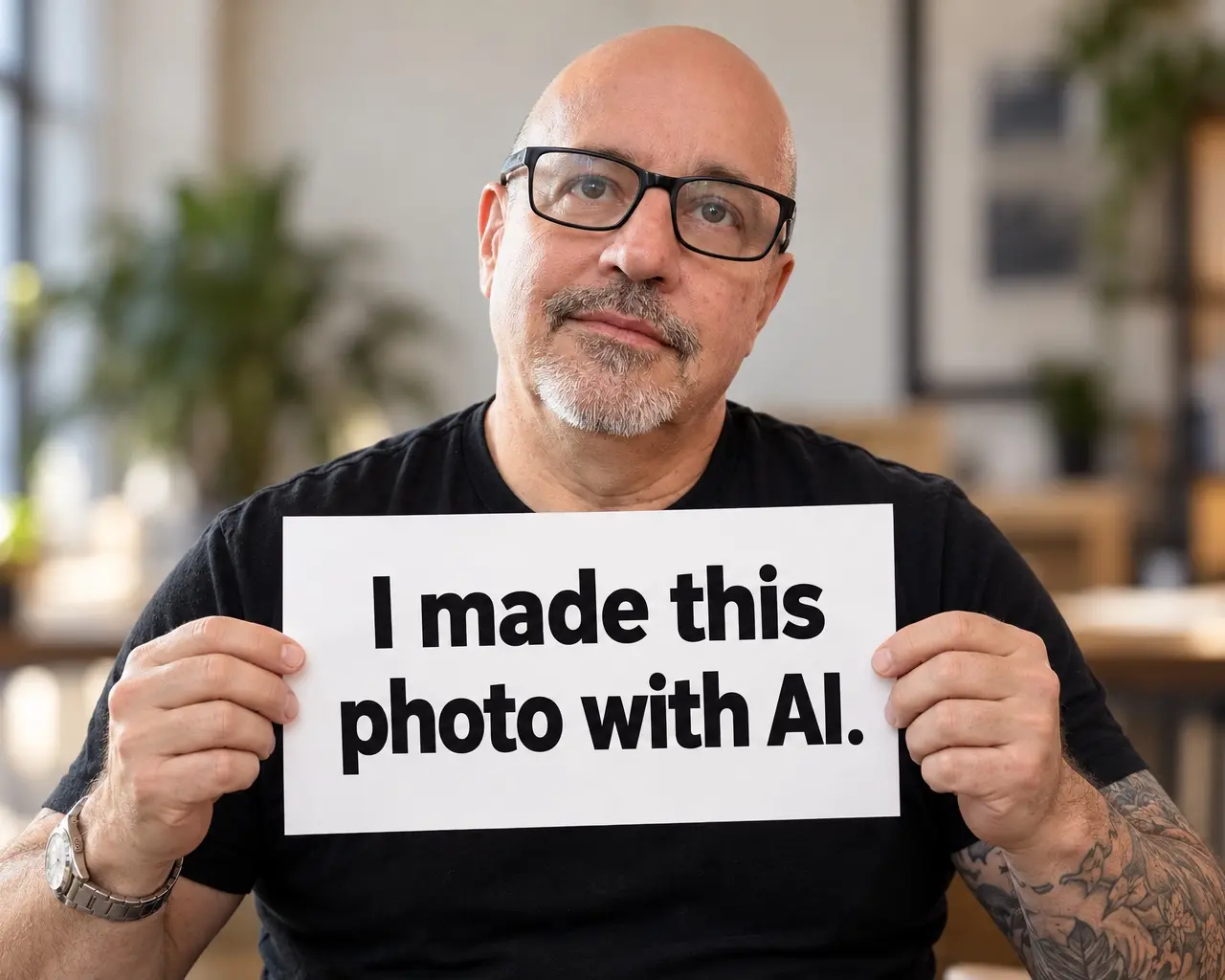
Andrew Bowins. AI-generated portrait based on a supplied photograph.
Published
At a glance
- AI can give adults over 50 more independence to explore ideas, build businesses and learn skills, while raising difficult questions about paid work that disappears.
- Experience helps us question AI output, but it does not remove the need to verify claims or seek expert help.
- Start with one useful task, stay curious and recognize that adapting offers possibilities — not guaranteed income or employment.
The uncomfortable moment comes after the satisfaction. I have used artificial intelligence to solve a problem, improve something or get an idea moving at RestlessUrban. I am pleased with the result. I have saved time and handled work I might otherwise have paid someone to do. Then I think about that someone.
They might be my age. They might have spent 30 years becoming good at the thing I just asked a machine to help me finish. They might be sitting at home wondering why the phone has stopped ringing. I cannot know their circumstances. But I recognize the fear.
After more than three decades in corporate life, I understand how much of ourselves we put into being useful. We become the person who knows how to handle the problem, write the plan or ask the question everyone else missed. That competence pays the bills. It also becomes a private reassurance: Whatever happens, I have something people need.
Learning to use AI after 50 has made that reassurance feel less secure.
I am building a business with tools that excite me and unsettle me, sometimes within the same hour. I love having more independence. I love being able to test an idea without first calculating whether I can afford the help. After years inside large organizations, there is pleasure in discovering how much I can attempt on my own.
But every new capability raises an awkward question: If I can do more without hiring someone, who else is discovering they can do more without hiring me?
That question lands differently after 50. For anyone approaching retirement without much financial cushion, a prolonged setback can feel especially threatening. There is also more history attached to what we do. Being told to reinvent yourself can sound invigorating until you realize how much of your existing life the instruction expects you to reconsider.
Learning AI after 50 means being a beginner again
We have adapted before. We learned computers, email, the internet, smartphones and whatever system management insisted would finally make everyone more productive. We survived several of those systems. Some of us even helped introduce them.
Still, repetition does not make change painless. Sometimes it makes us tired. There is a particular frustration in having spent decades earning credibility, only to find yourself once again trying to demonstrate that you belong in the room.
And there is pride. I suspect we talk too little about that.
It is uncomfortable to be accomplished and inexperienced at the same time. To know your field and struggle with a tool. To ask a basic question when you are accustomed to answering difficult ones. The temptation is to dismiss the whole thing before it has a chance to make you feel inadequate.
I understand that impulse. I also think it could cost us.
Using AI has reminded me that experience can help me evaluate what appears on the screen. I can recognize an answer that ignores how people behave, a suggestion that creates more problems than it solves, a paragraph that says something smoothly without saying anything worth reading. That judgment matters. It does not make me immune to displacement, but it gives me a way to participate.
The opportunity is personal. A business idea that once felt too expensive to explore may now be within reach. Years of knowledge might become the basis of a consulting service, a creative project or something you finally have time to learn. For me, AI has shortened the distance between wondering whether I could try something and actually trying it.
I want that possibility available to people who have been made to feel their productive years are ending. In “Who Decides When Our Best Work Is Behind Us?”, I challenged the assumption that experience expires. Learning AI skills is one way to challenge it through action.
The savings come with a responsibility
But curiosity needs caution. AI can present false information confidently, a risk identified by NIST. Saving money is less impressive if I cannot properly judge the work. Knowing when to bring in a person remains part of my responsibility.
And “learn AI” is insufficient advice for someone losing income. It guarantees neither a customer nor an employer willing to see beyond a birth date. We can encourage each other without pretending everyone will be rewarded fairly.
I am trying to stop expecting myself to be good at something before I have learned it. My advice is modest: Find one use that matters to you. Try it. Question the result.
I intend to keep learning. I also intend to remember that some tasks I now handle are ones I would previously have considered commissioning. Somewhere between my excitement and someone else’s uncertainty is the future we are helping create. I want more say in it than fear alone would allow.
Read next



More Features about Work

Music changed my life. Playing guitar helped me heal, grow stronger and embrace change.

Founder Andrew Bowins shares the story behind the creation of RestlessUrban.
Job search after 50: Phyl Terry's “Never Search Alone” and the support of collaborative Job Search Councils.

Companies that actively invest in retaining and hiring professionals over 50 enjoy clear advantages.

Inspiring second acts from people over 50 who found passion and purpose through flying, teaching and music.

Music and brain health: How a former chancellor found joy, stress relief and purpose through daily 90s rock jams.

Career change after 50: rethinking work-life balance, encore careers and what meaningful work looks like.

Artist Gary Holme reinvents himself at 70, proving it’s never too late to reclaim passion and create anew.