Published
At a glance
- AARP’s 2026 survey found 49% of workers age 50-plus interested in learning about AI for work, while 12% reported taking related training.
- Boston College linked greater occupational AI exposure to increased employment exits among workers 55-plus; it did not establish individual causes.
- Urban Institute researchers recommend job-specific training and paid practice time, with experienced workers helping evaluate AI output.
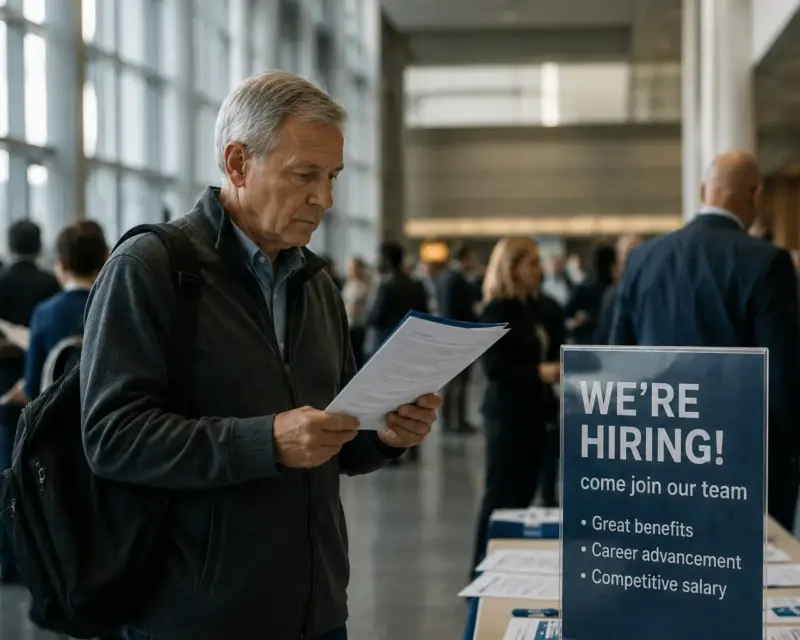
AI-generated illustration. The people shown are not study participants.
For workers over 50, adapting to artificial intelligence involves more than deciding whether to try a chatbot. Research published in 2026 points to a gap between interest in learning and participation in training, alongside early evidence of employment disruption.
Interest in AI training exceeds participation
In an AARP survey updated May 11, 49% of U.S. adults age 50-plus in the labor force said they were interested in learning more about using AI in their work. Just 12% reported taking work-related AI training or classes.
The survey also captured mixed feelings: 24% viewed AI as a threat to their line of work, 19% as an opportunity and 37% as both. Those responses describe perceptions, not measured job losses.
The findings came from interviews conducted March 12–16, 2026, with 1,015 adults age 50-plus in the labor force, using the probability-based Foresight 50+ panel. Results were weighted.
An early warning about employment exits
A separate June 30 analysis from Boston College’s Center for Retirement Research examined workers ages 55 and older, linking Current Population Survey records with occupational AI-exposure scores.
After ChatGPT’s November 2022 launch, greater exposure was associated with increased transitions out of employment, including into unemployment. The analysis did not find a corresponding statistically significant increase in exits from the labor force.
That distinction matters: losing or leaving employment is not the same as retiring. The study does not establish that AI caused individual layoffs. Its exposure measure estimates what AI can do within occupations, rather than whether an employer actually used it.
Many highly exposed occupations still had lower predicted exit rates than less-exposed, more physical jobs. The findings suggest a changing advantage, not the disappearance of experienced professionals.
Support matters as much as willingness
A January Urban Institute report recommends practical, job-specific training and paid time to experiment. It also identifies opportunities for experienced workers to evaluate AI output and apply contextual judgment.
That report combined a literature review with interviews and focus groups involving 20 people across 19 organizations. It was supported by AARP, so it should not be treated as an entirely separate, unrelated evidence base. Its qualitative findings are not a national estimate of training outcomes.
Together, the reports support a cautious conclusion: AI may offer useful new capabilities, but willingness to learn cannot substitute for accessible training or guarantee continued employment.
Read next



More Research

New research shows it is essential for fostering healthy aging and supporting longevity.

With the use of a mere five drops of blood, now possible for a person’s true biological age to be determined.

Research indicates travel enhances physical health, cognitive resilience, and social engagement.

A new global survey uncovers the many ways pet cats and dogs impact our daily wellbeing.

New study highlights how digital platform can uncover problems even before symptoms emerge.

Cats are outpacing the dogs when it comes to pet adoption, according to new statistics released by PetSmart.

New findings show many Americans face financial stress from inflation and rising cost of living.

Study shows engagement with the devices leads to better cognitive health outcomes.