Published
At a glance
- AI and technology after 50 are explored through possible uses in work, learning, travel, family life and everyday organization.
- The feature challenges assumptions that older adults are unwilling to adapt, emphasizing the experience of people who have already navigated decades of technological change.
- Curiosity is its central theme, alongside choosing useful applications and developing the digital awareness needed to engage with new tools thoughtfully.
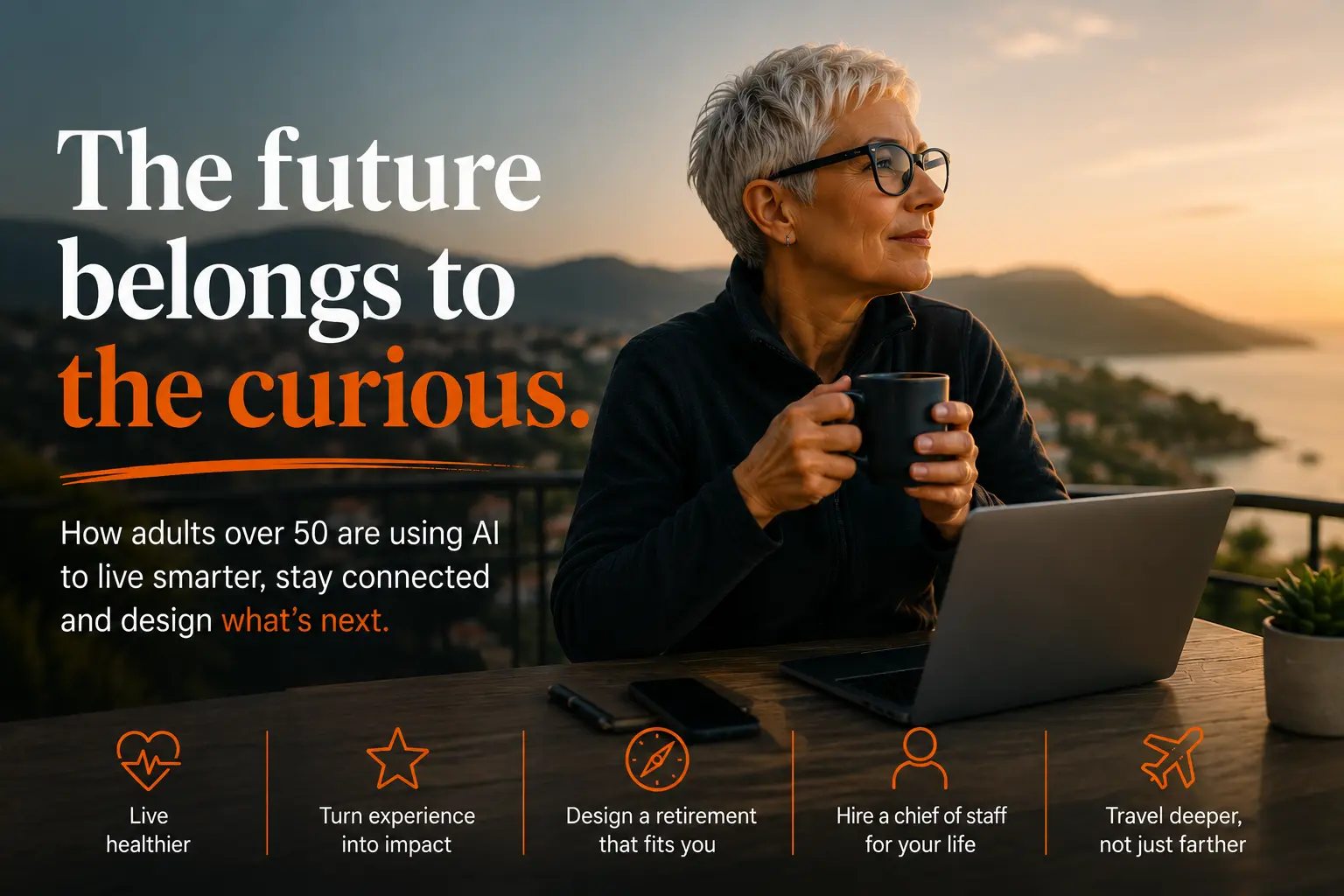
The fastest-growing group of AI users in America isn’t sitting in a college dorm. They’re sitting at kitchen tables, airport lounges, coffee shops and home offices.
They’re over 50.
The assumption that people over 50 struggle with technology has always been wrong. We helped build the PC era. We adopted the internet. We carried the first mobile phones. We embraced social media, smart homes and wearable technology. We’ve spent a lifetime adapting.
The issue was never adoption. The issue is application. We don’t want technology for technology’s sake. We want it to help us live better, stay healthier, learn faster and remain relevant longer.
Here’s a few examples to illustrate what I mean.
1. Your Body is Becoming Data
Healthcare is moving from reactive care to continuous intelligence. For most of our lives, healthcare has been reactive. You felt something, called a doctor and waited. That model is changing.
A ring on your finger can track sleep, heart rhythm and recovery. AI models can identify signs of cognitive decline years before symptoms appear. Researchers are developing digital twins—virtual models of your body built from wearable data, genetics and blood work—that will allow doctors to simulate treatments before prescribing them.
The longevity conversation has shifted from lifespan to health span.
2. Experience Has Become an Asset Class
Thirty plus years of expertise can now reach the world. For the first time in history, expertise alone can build an audience. No printing press. No broadcast license. No permission required.
A retired executive launches a newsletter. A traveler builds a YouTube channel. A consultant records a podcast from a guest room.
Someone, somewhere, needs exactly what you know. Courses, webinars, guides and advisory services can all be built from a laptop.
Experience used to depreciate at retirement. Today, it can compound.
3. Retirement Is Becoming a Design Choice
The old sequence is breaking down. Build the life you want. Starting a business once required office space, employees and significant capital. Today it often requires a laptop and a decision.
AI can help build websites, create marketing copy, manage bookkeeping and handle tasks that once required specialists.
The old script—work, retire, golf—is now optional. You can consult a little, travel a little, teach a little and build a little.
Previous generations inherited a script. Ours is increasingly self-authored.
4. Hire a Chief of Staff for Your Life
For the first time, everyone can afford one. CEOs have always had someone to research options, summarize information and challenge assumptions. Now you do too.
Buying a car? AI can compare models, reliability records and pricing strategies. Reviewing investments? Preparing questions for an attorney? Learning a new field?
AI reads faster than you, remembers more than you and never sends an invoice.
The keyboard era rewarded people who grew up typing. The AI era rewards curiosity.
5. The World’s Best Concierge Fits in Your Pocket
Technology is shrinking the gap between tourist and traveler. Imagine landing in Barcelona with a translator, concierge, historian and local guide in your pocket.
You can discover where locals actually eat, translate menus in real time and uncover experiences guidebooks never mention.
The difference between being a tourist and being a traveler once depended on money and connections. Today it depends far less on money and far more on curiosity.
6. Curiosity Has Never Been Cheaper
The world’s best teachers are finally available to everyone. Wine. Jazz. Italian. Photography. Roman history. Investing.
Master classes and AI tutors with unlimited patience are available whenever you want them.
Lifelong learning used to be an aspiration. Now it’s infrastructure.
7. Geography Matters Less than Passion
Shared passion now matters more than shared zip code. Your tribe may not live in your neighborhood. The cyclists, genealogists, pickleball enthusiasts and classic-car collectors who share your interests may be scattered around the world.
Today they can gather in one place online.
Loneliness is one of the most significant challenges facing people over 50. Technology’s most overlooked contribution may be helping people find connection through shared interests rather than shared geography.
8. Every Family Has a Historian
Technology is turning genealogy into discovery. Digital archives, DNA services, AI photo restoration and searchable historical records are helping families rediscover their stories.
Faded photographs become clear again. Illegible documents become readable. Family legends can finally be confirmed—or delightfully disproven.
Every family eventually needs someone to preserve its history. Technology has made that role far more interesting.
9. Technology Can Help Carry the Weight
Caregiving remains human. Coordination doesn’t have to be. Millions of Americans serve as caregivers. Many now use technology to manage medications, coordinate appointments and monitor loved ones from hundreds of miles away.
Sensors can detect falls. AI can identify unusual behavior patterns. Shared digital tools can keep entire families informed.
The most meaningful technology in your life may be the technology you use for someone you love.
10. Learn Digital Self-Defense
The new street smarts are screen smarts. The same AI that powers research assistants also powers voice-cloning scams and sophisticated fraud.
The answer isn’t retreat. It’s awareness.
Set family code words. Verify before you wire money. Treat urgency as a warning sign rather than a call to action.
The safest people aren’t the most fearful. They’re the most informed.
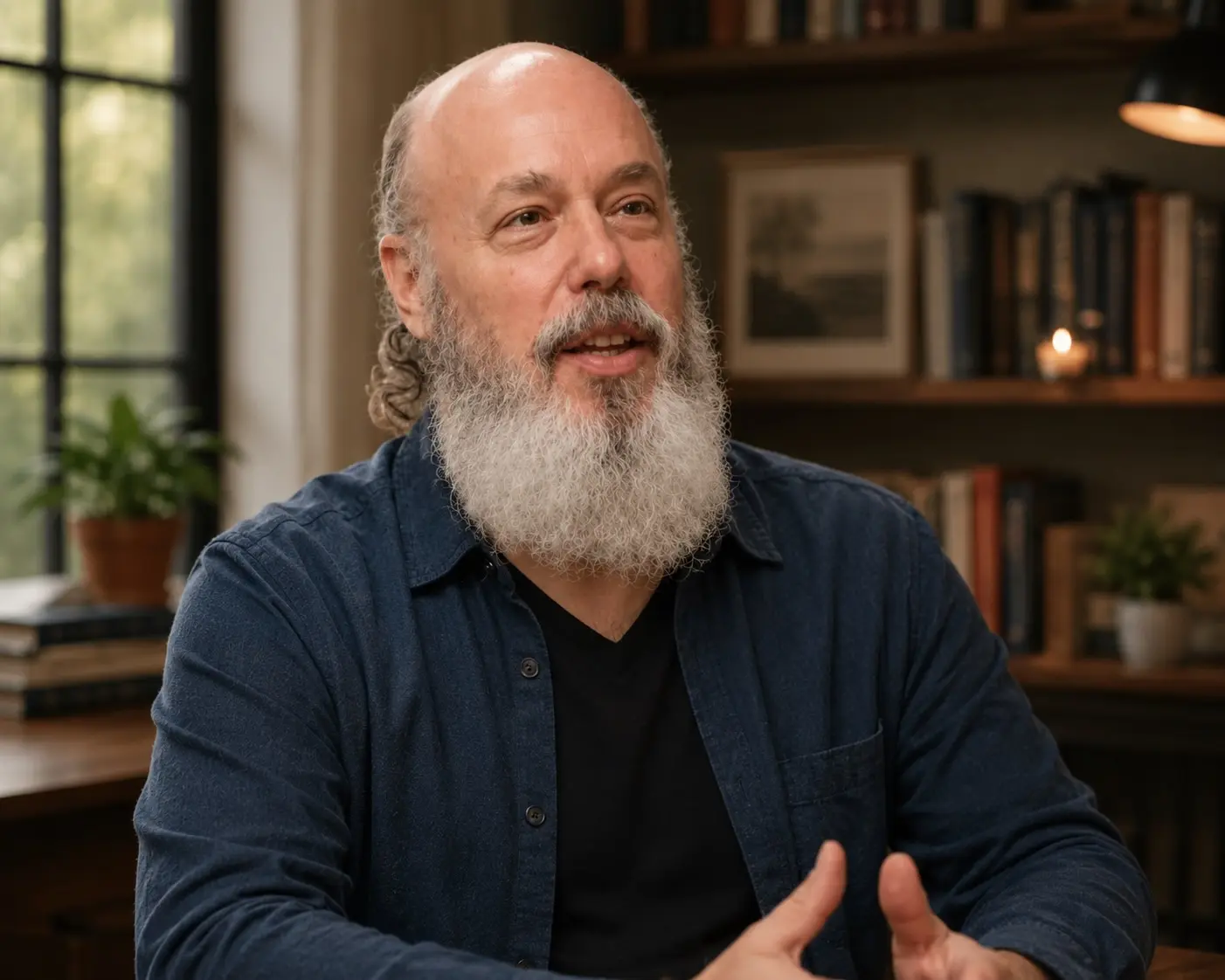
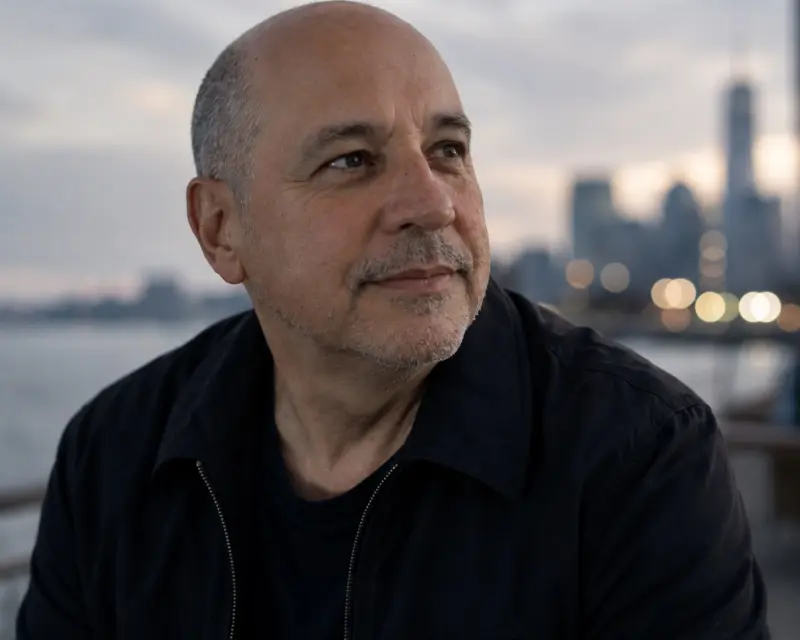
Bob Pearson seen here says, “Age is a number. Curiosity is a competitive advantage. The future belongs to the restless.”
A Closing Thought
The dividing line isn’t age. It never was. The dividing line is curiosity.
Some people stop exploring at 30. Others are still learning at 80. AI doesn’t care how old you are. It rewards the same trait that has always separated the people who keep growing from the people who slowly fade into irrelevance.
Curiosity.
The future won’t belong to the young.
It will belong to the restless.
Read next





More Features about Work

Music changed my life. Playing guitar helped me heal, grow stronger, and embrace change.

Founder Andrew Bowins shares the story behind the creation of RestlessUrban.
Job search after 50: Phyl Terry's Never Search Alone and the support of collaborative Job Search Councils.

Companies that actively invest in retaining and hiring professionals over 50 enjoy clear advantages.

Inspiring second acts from people over 50 who found passion and purpose through flying, teaching, and music.

Music and brain health: How a former chancellor found joy, stress relief, and purpose through daily 90s rock jams.

Career change after 50: rethinking work-life balance, encore careers and what meaningful work looks like.

Artist Gary Holme reinvents himself at 70, proving it’s never too late to reclaim passion and create anew.