
Published
At a glance
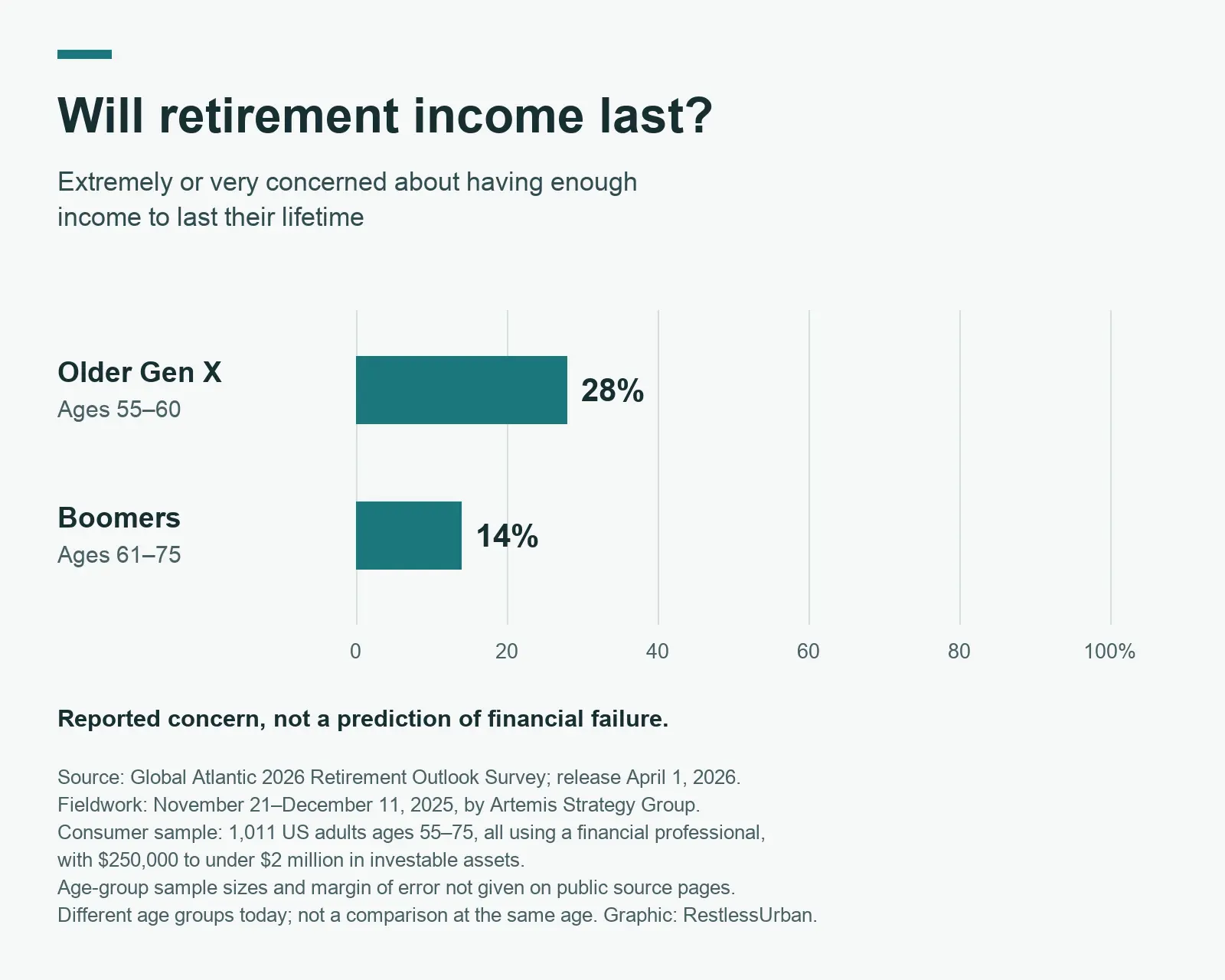
- Among surveyed investors aged 55–60, 28% were extremely or very concerned about lifetime income, compared with 14% of those aged 61–75.
- Across the consumer sample, 38% lacked a specific income plan; only 4% reported no plan at all.
- The study covered 1,011 advised investors with $250,000 to under $2 million in assets, limiting broader comparisons.
Hero image: AI-generated conceptual illustration created with OpenAI for RestlessUrban. The people shown are not study participants.
Turning retirement savings into dependable income is a source of concern for older Gen X respondents in Global Atlantic’s 2026 Retirement Outlook Survey. But the findings describe a particular group: investors who already work with a financial professional, rather than everyone approaching retirement.
The insurer released the results on April 1, 2026, drawing on research conducted late in 2025. Its comparison puts respondents aged 55–60 alongside Boomers aged 61–75; it does not cover the whole Gen X generation.
Income worries differ across age groups
Among those aged 55–60, 28% said they were extremely or very concerned about having enough income to last their lifetime, compared with 14% of the older group.
In a separate question, 48% of Gen X respondents anticipated returning to work after retirement because of financial concerns, versus 21% of Boomers. That is an expectation, not evidence that respondents have returned to work or will necessarily need to do so.
The comparison also captures people at different stages of life. It cannot establish whether today’s older Gen X respondents are more anxious than Boomers were when they were the same age.
A gap between savings and an income plan
Across the consumer sample, 38% lacked a specific retirement income plan, according to the survey findings and methodology. This was not a Gen X-only result.
The breakdown matters: 19% had a general plan they considered insufficient, 15% had goals or a direction without a well-developed plan, and 4% had no plan for receiving retirement income. Treating all 38% as having no plan would overstate the gap.
For readers, the distinction is between an accumulated balance and a description of how it will fund spending. These findings measure reported concerns and planning, not an audit of whether someone’s savings will last.
Who the survey represents
Artemis Strategy Group conducted the nationwide online survey from November 21 to December 11, 2025. It included 1,011 consumers aged 55–75 with $250,000 to under $2 million in investable assets, all working with a financial professional, plus a separate sample of 505 financial professionals.
The asset and advice requirements limit its reach, particularly for households with fewer investments. The public pages do not give age-group sample sizes or a margin of error, so the comparisons should be read descriptively.
Global Atlantic sells retirement and insurance products. Its survey offers insight into its sampled investors’ concerns; it does not demonstrate that a particular product or strategy will resolve them.
Read next



More Research

New research shows it is essential for fostering healthy aging and supporting longevity.

With the use of a mere five drops of blood, now possible for a person’s true biological age to be determined.

Research indicates travel enhances physical health, cognitive resilience, and social engagement.

A new global survey uncovers the many ways pet cats and dogs impact our daily wellbeing.

New study highlights how digital platform can uncover problems even before symptoms emerge.

Cats are outpacing the dogs when it comes to pet adoption, according to new statistics released by PetSmart.

New findings show many Americans face financial stress from inflation and rising cost of living.

Study shows engagement with the devices leads to better cognitive health outcomes.